In the rapidly maturing global photovoltaic (PV) market, the quest for the lowest Levelized Cost of Energy (LCOE) has led to a technological renaissance in mounting structures. The Tilted Single Axis Tracker (TSAT) stands at the pinnacle of this evolution, bridging the gap between standard horizontal trackers and high-cost dual-axis systems. By incorporating a fixed tilt angle (typically between 10° to 30°) along a single tracking axis, TSAT systems optimize the capture of solar irradiance, particularly in high-latitude regions or areas with high diffuse light components.
Shandong Zhaori New Energy Tech. Co., Ltd. (Sunchaser Tracker) has pioneered this niche, leveraging over a decade of independent intellectual property and manufacturing expertise. This whitepaper examines the technical superiority, economic feasibility, and supply chain resilience of Chinese-manufactured TSAT systems in the 2024-2030 energy landscape.
Founded in June 2012, Shandong Zhaori New Energy Tech. Co., Ltd. is a vertically integrated high-tech enterprise. With 10 specialized departments—including R&D, Quality Assurance, and Foreign Trade—the company employs over 60 professional technology talents dedicated to perfecting PV bracket applications. Our core philosophy is simple: More Simple, More Reliable, More Effective.
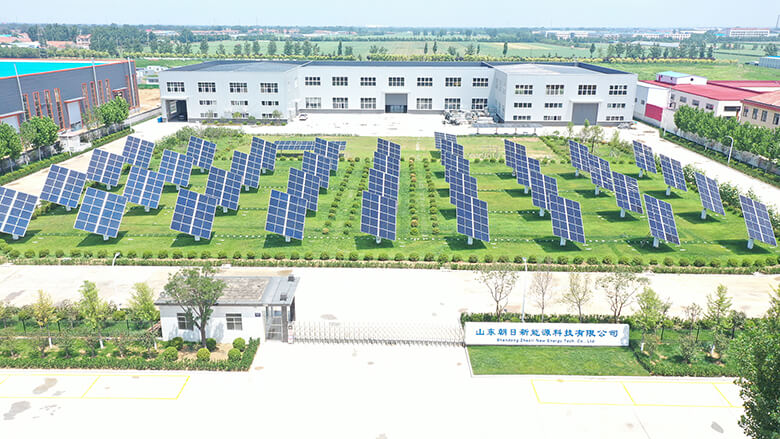
Our 50,000 sqm factory is equipped with state-of-the-art CNC machine tools, laser cutting machines, and automatic welding robots, ensuring that every Tilted Single Axis Tracker meets stringent international standards, including TUV, CE, and ISO certifications. With a production output of 500MW per month, we provide the scale necessary for utility-scale deployments globally.
The application of Tilted Single Axis Trackers is not a "one-size-fits-all" solution. Its success depends on deep geological and meteorological data integration.
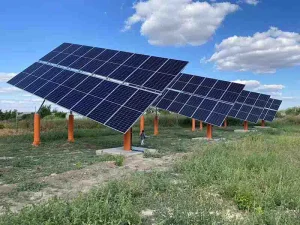
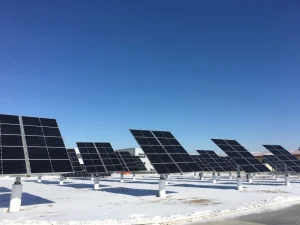
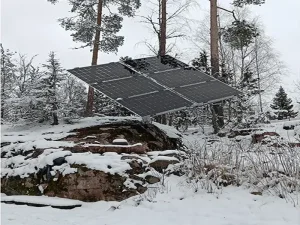
In regions such as Northern Europe, Canada, and Northern China, the sun stays lower on the horizon. A standard flat tracker loses efficiency during winter months. TSAT systems, with their inherent tilt, maintain an optimal angle of incidence, often outperforming flat trackers by 10-15% in annual yield in these specific geographies.
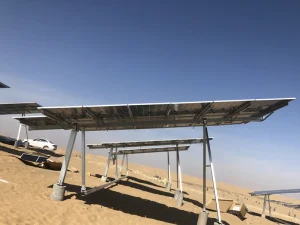
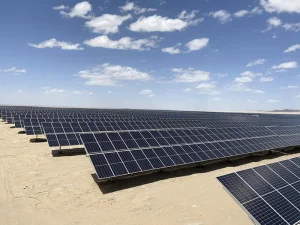
Desert projects (e.g., Middle East, Gobi Desert) face extreme heat and sand-induced abrasion. Sunchaser trackers are designed with specialized anti-rust treatments and dust-resistant drive mechanisms, ensuring 25-year operational lifespans in harsh conditions.
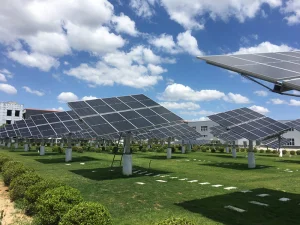
By elevating the modules and using a tilted axis, land can be dual-purposed for grazing or shade-tolerant crops. This is becoming a critical commercial requirement in land-scarce regions like Japan and Southeast Asia.
Currently, the global solar tracker market is shifting from "mechanical hardware" to "smart solar infrastructure." Western markets are increasingly demanding "bankable" trackers that can withstand extreme wind loads and snow accumulation. Chinese manufacturers have responded by dominating the mid-market price point while matching the technical specifications of Tier 1 global brands, offering superior Pricelist competitiveness without compromising on safety or quality.
The future of the Tilted Single Axis Tracker lies in the integration of AI and Bifacial module technology.
Traditional trackers follow a basic astronomical algorithm. The next generation of Sunchaser trackers utilizes machine learning to optimize the "stowing" position during storms and to adjust angles during cloudy days to capture diffuse light, a technique known as "Diffuse Irradiance Optimization."
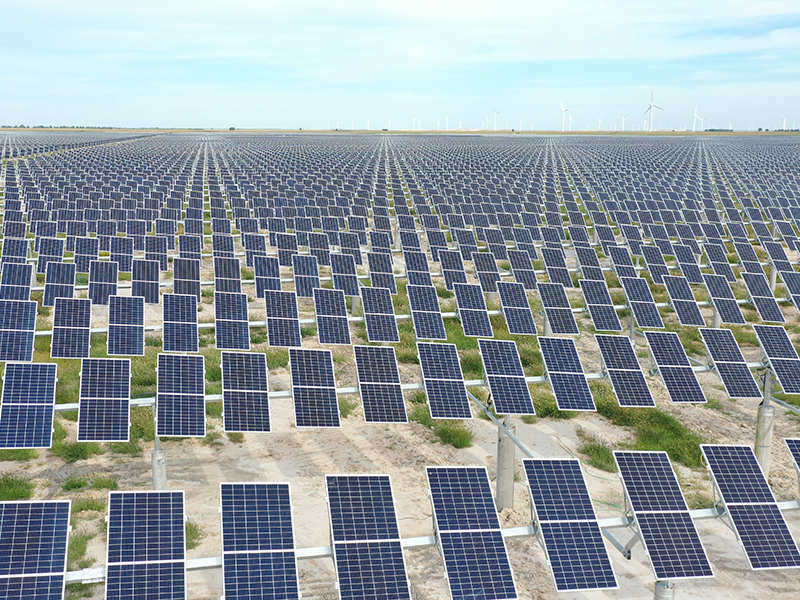
Bifacial modules can generate electricity from the backside. Tilted trackers reduce the shading on the rear side of the panels compared to traditional fixed-tilt or heavy-structured trackers, potentially adding another 5-8% to the total energy yield.
With IoT sensors integrated into the tracking controllers, plant operators can monitor the health of the actuators and bearings in real-time, moving from reactive maintenance to predictive maintenance, significantly lowering the long-term TCO (Total Cost of Ownership).
Our manufacturing prowess is rooted in the industrial cluster of Shandong, China. This provides us with a unique "Supply Chain Resilience."
Pricing is typically determined by: 1) Steel market rates (HDG steel), 2) Total project capacity (MW), 3) Soil conditions (affecting foundation design), and 4) Specific wind load requirements of the site. Contact us for a customized quote.
While a Dual Axis tracker captures the most energy, it is mechanically complex and more expensive. A TSAT offers about 70-80% of the gains of a Dual Axis system but at a much lower CAPEX and significantly lower maintenance cost.
Yes. Our designs minimize backside shading, making them the perfect partner for high-efficiency bifacial modules to maximize albedo gains.
We provide comprehensive operation and maintenance manuals, remote technical support, and on-site engineering supervision during the installation phase for major projects.
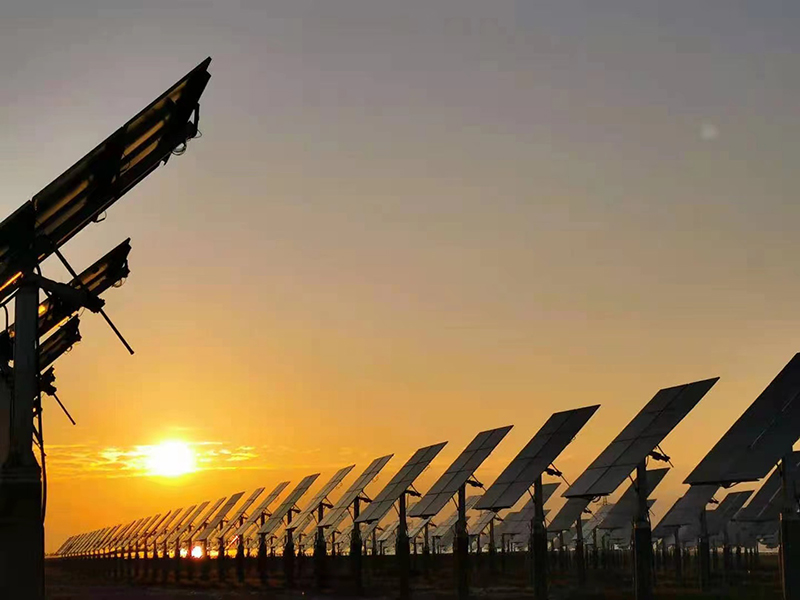
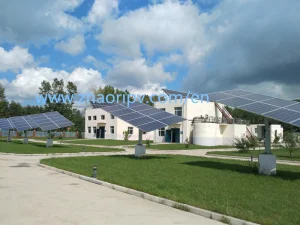
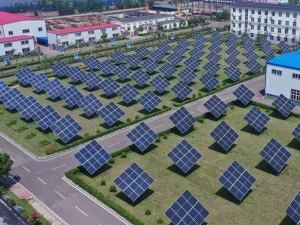
5MW in North China
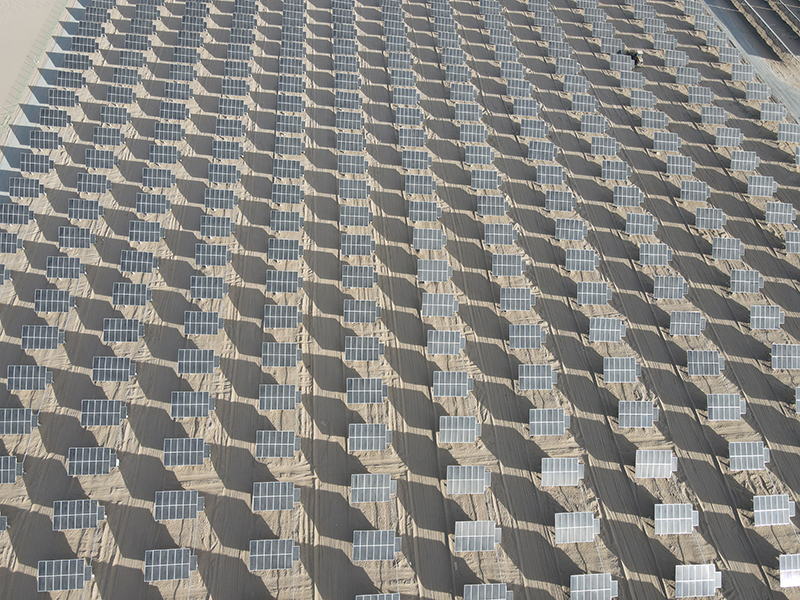
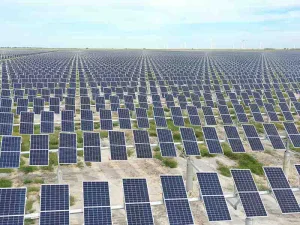
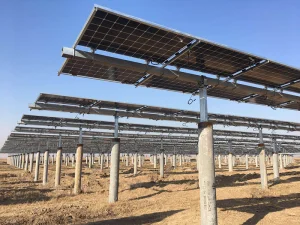
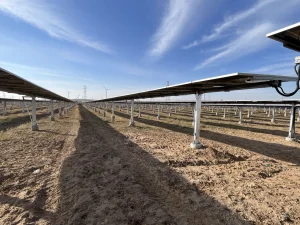
20MW Tilted Single Axis in Desert
40MW ZRPT Flat Single Axis with Inclined Module
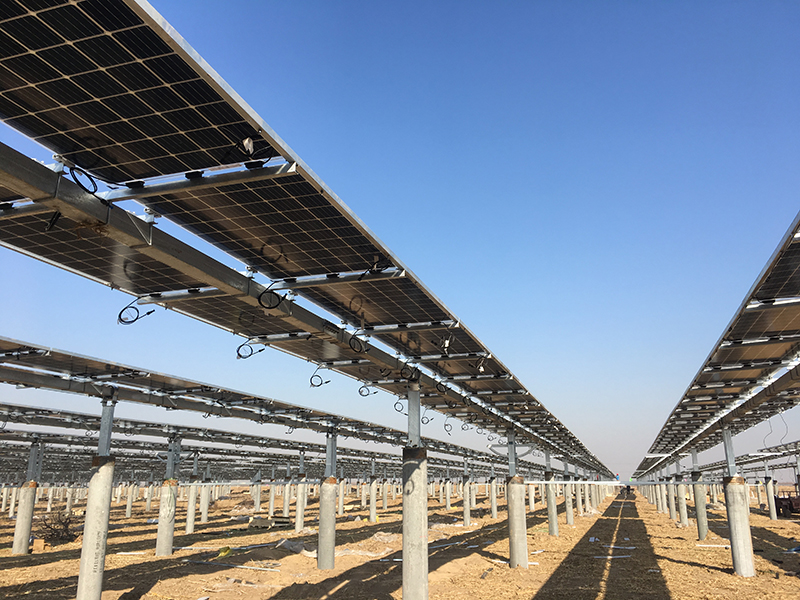
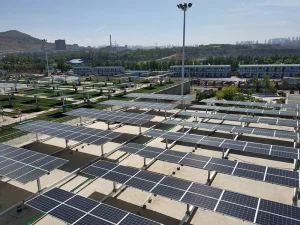
110MW Utility Project with Bifacial Modules
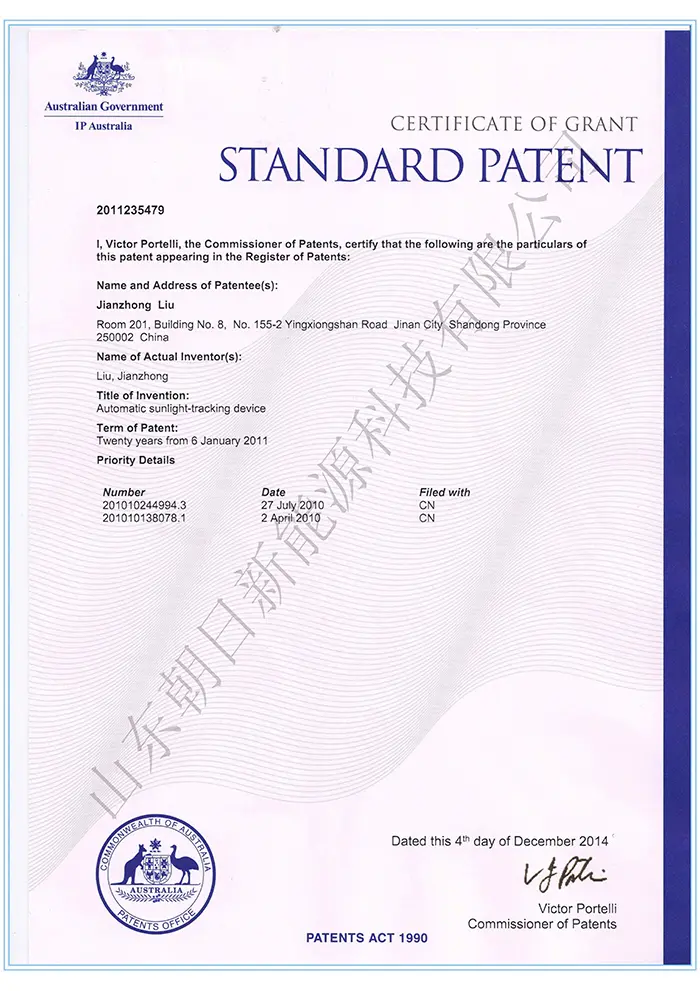
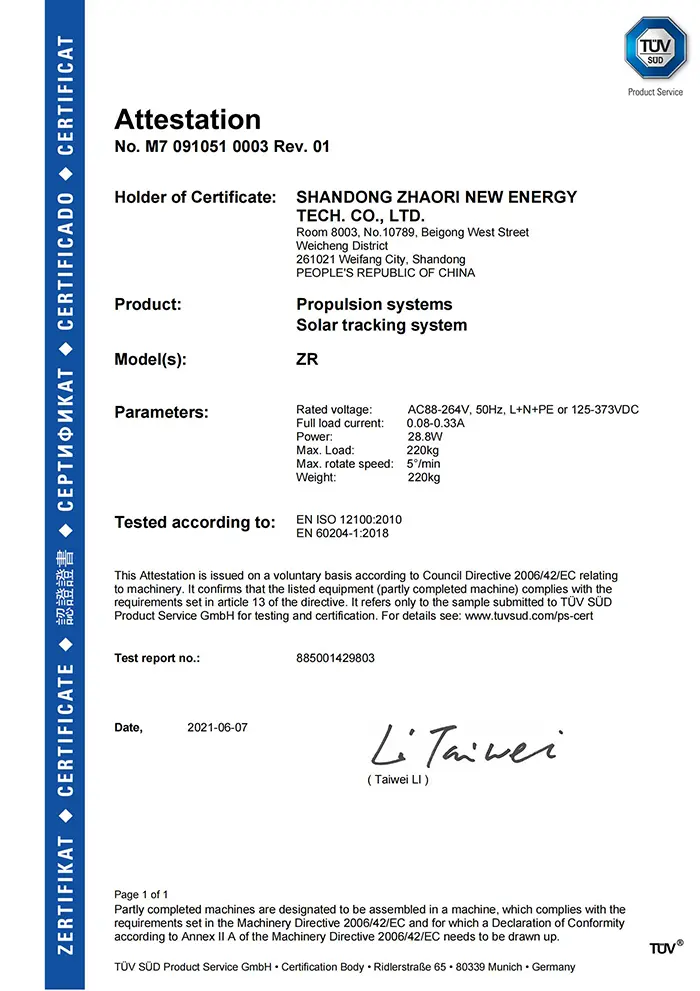
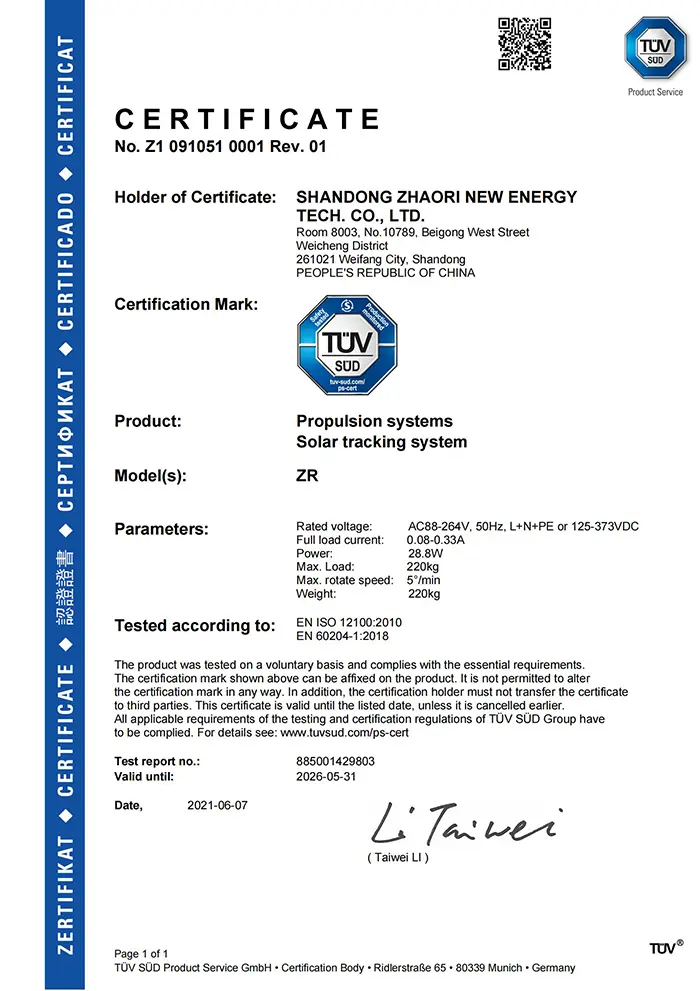
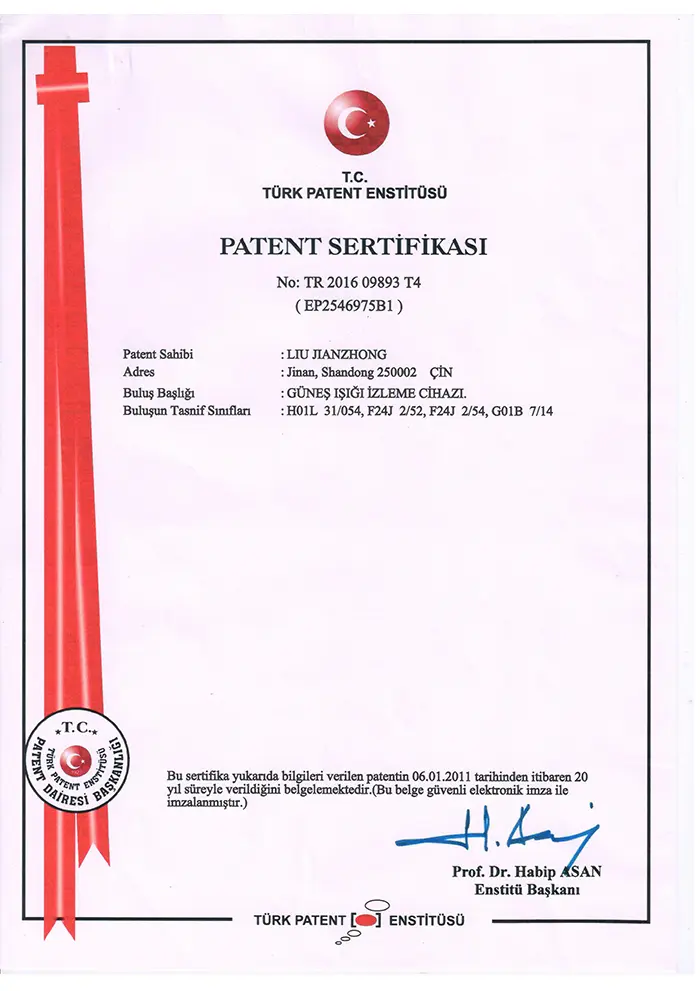
Our products have obtained patents of invention from the Europe Patent Office, the United States, Canada, Australia, Japan, South Korea, Thailand, India, Brazil, South Africa etc., as well as 8 Chinese National Invention Patents and more than 30 Utility model patents, and also obtained TUV, CE, ISO certification.
 Zhaori