High-Quality 2P Flat Single Axis Solar Tracker Company, Companies

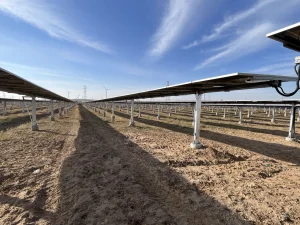
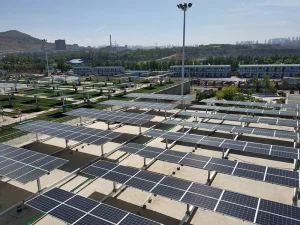
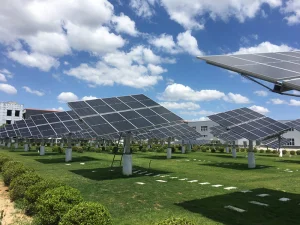
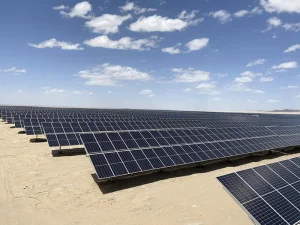
ZRP flat single axis solar tracking system has one axis tracking the azimuth angle of the sun. Each set mounting 10 - 60 pieces of solar panels, single row type or 2 - rows linked type, given a 15% to 30% production gain over fixed-tilt systems on the same size array.

Product Description

The flat single axis solar tracking system has one axis tracking the azimuth angle of the sun. Each set mounting 10 - 60 pieces of solar panels, single row type or 2 - rows linked type, given a 15% to 30% production gain over fixed-tilt systems on the same size array.

Currently, the flat single axis solar tracker in the market mainly features two solar array layout forms: 1P and 2P. The 1P layout scheme provides superior structural stability and excellent wind and snow pressure resistance, although it involves a higher amount of steel and more pile foundations. Another consideration is that its central main beam may cause more back shielding to bifacial solar modules compared to the 2P scheme.

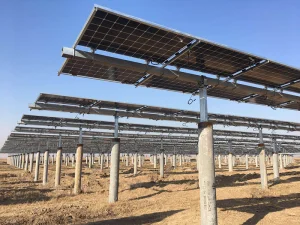
The 2P scheme offers significant cost advantages. To ensure structural firmness for 500W+ and 600W+ large area solar modules, a double main beam structure has been developed. This design effectively supports the solar panels, prevents sagging at both ends, and reduces hidden cracks in the modules.

0.1° - 2.0°
🛡
Up to 40 m/s
15% - 30%
📜
3 Years
Technical Specifications
System type Single row type / 2-3 rows linked
Control mode Time + GPS
Average tracking accuracy 0.1° - 2.0° (adjustable)
Gear motor 24V/1.5A
Output torque 5000 N·M
Tracking power consumption 5kWh/year/set
Azimuth angle tracking range ±45° - ±55°
Back tracking Yes
Max. wind resistance in horizontal 40 m/s
Max. wind resistance in operation 24 m/s
Material Hot-dipped galvanized ≥65μm
Working temperature -40℃ - +80℃
Weight per set 200 - 400 KGS
Total power per set 5kW - 40kW
Frequently Asked Questions
1. How much additional energy can the ZRP solar tracking system produce?
The system provides a 15% to 30% production gain compared to traditional fixed-tilt systems on the same size array.
2. What are the differences between 1P and 2P layout schemes?
1P layouts offer better structural stability and resistance to wind/snow but use more steel. 2P layouts are more cost-effective but require advanced designs like double main beams to ensure module safety and reduce sagging.
3. How does the system ensure stability for large 500W+ and 600W+ modules?
The system utilizes a double main beam structure to effectively support larger panels, preventing sagging and minimizing the risk of hidden cracks.
4. What is the wind resistance capacity of the tracker?
The system is designed to withstand horizontal wind speeds of up to 40 m/s and remains operational in wind speeds up to 24 m/s.
5. Does the system include back tracking functionality?
Yes, the system is equipped with back tracking capabilities to optimize panel performance and minimize shading effects.
6. What materials are used to prevent corrosion?
The system is constructed using hot-dipped galvanized steel with a coating thickness of ≥65μm, ensuring durability in various environments.

Related Products