Explore our flagship ZRD and ZRT series designed for maximum energy yield.
As global energy markets shift toward competitive bidding, the Levelized Cost of Electricity (LCOE) has become the primary metric for project viability. Dual-axis trackers, by maintaining a perpendicular angle to the sun's rays throughout the day, can increase energy yield by up to 35-45% compared to fixed-tilt systems. This drastic increase in production directly correlates to a faster Internal Rate of Return (IRR) for utility-scale investors.
Unlike fixed systems that peak only at solar noon, 2-axis trackers provide a wider, flatter production curve. This "shoulder period" generation is critical for grid stability, providing power during early morning and late afternoon peaks when demand is high but traditional solar supply is low.
For industrial applications like Green Hydrogen production or large-scale water desalination, a constant and high-density energy supply is required. Our 2-axis solutions provide the requisite energy density, reducing the total land footprint needed for industrial-grade solar farms.
Shandong Zhaori New Energy Tech. Co., Ltd. is a high-tech and new energy company based on independent intellectual property rights. Founded in June 2012, we have established a robust ecosystem of innovation with 10 specialized departments including R&D, Technical, Engineering, Production, and Quality Assurance.
Our team consists of more than 60 professional technology talents who have focused on photovoltaic power stations and solar tracking technology for more than 10 years. This deep-seated expertise allows us to navigate complex structural challenges and electronic control precision that define the modern solar era.
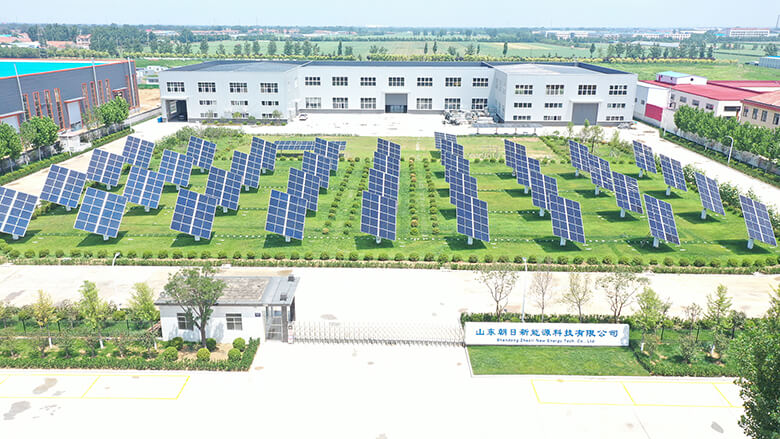
Our factory covers an area of 50,000 square meters, equipped with CNC machine tools, laser cutting machines, automatic welding robots, and plasma machines. With over 300 skilled production workers, we achieve a monthly production capacity of 500MW.
Quality is not just a department; it's our DNA. Every product undergoes strict screening: Raw Material Analysis -> Precision Cutting -> Robotic Welding -> Anti-Rust Treatment -> Inspection -> Packaging. Our adherence to TUV, CE, and ISO certifications ensures that every bracket leaving our facility is built for a 25-year service life.
The transition to 2-axis tracking is accelerating across diverse geographies.
| Region | Market Drivers | Preferred Technology |
|---|---|---|
| Middle East & Africa | High DNI (Direct Normal Irradiance), desert environments. | ZRD Dual Axis (Dust resistant, high yield). |
| North America | ITC Tax Credits, Utility-scale demand. | 2P Flat Single Axis & ZRD Series. |
| Europe | High energy prices, limited land availability. | Dual Axis (Maximum efficiency per sqm). |
| Asia Pacific | Floating solar, mountainous terrains, Agri-PV. | Tilted Single Axis & Customized Dual Axis. |
Our products have obtained invention patents from the European Patent Office, USA, Canada, Australia, Japan, South Korea, Thailand, India, Brazil, and South Africa. This intellectual property security protects our clients from legal risks in international markets.
Compliance is mandatory. We carry TUV, CE, and ISO certifications, meeting the stringent bankability requirements of international lenders and insurance companies.
We provide localized engineering support, including wind tunnel testing data for specific regional wind loads (hurricanes, typhoons) and snow load calculations for high-latitude regions.
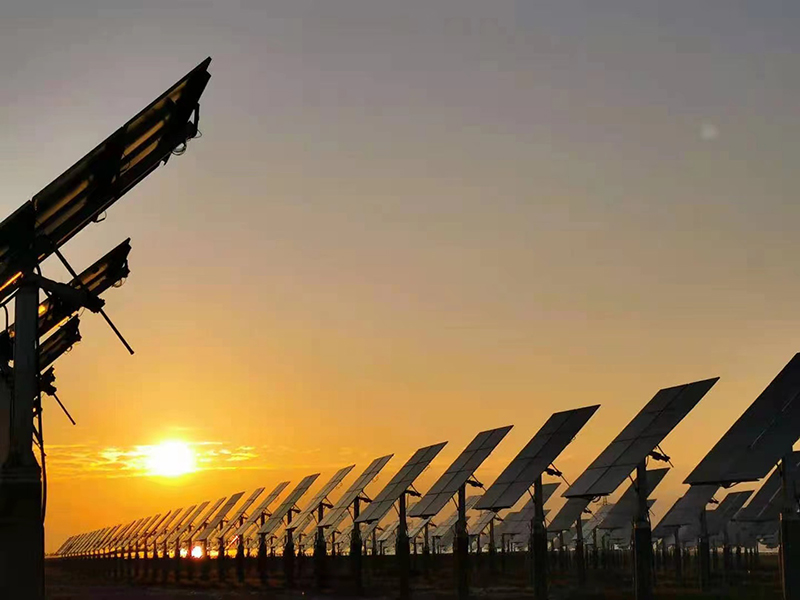
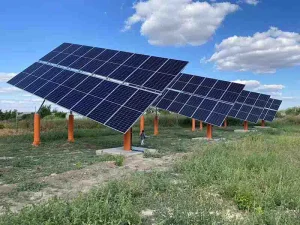
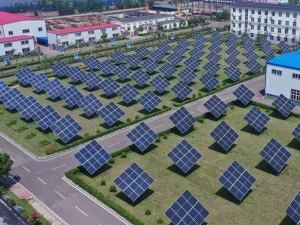
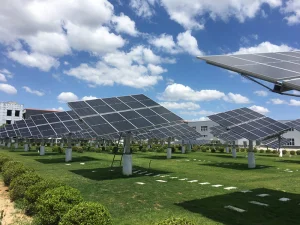
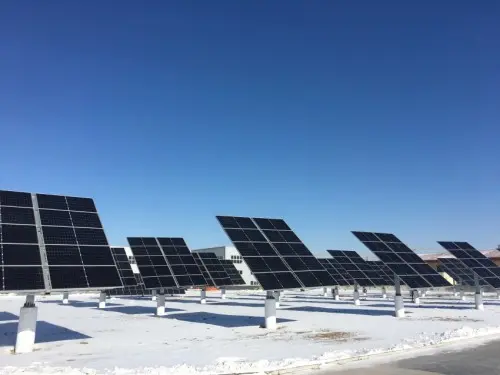
5MW Dual Axis Project in North China
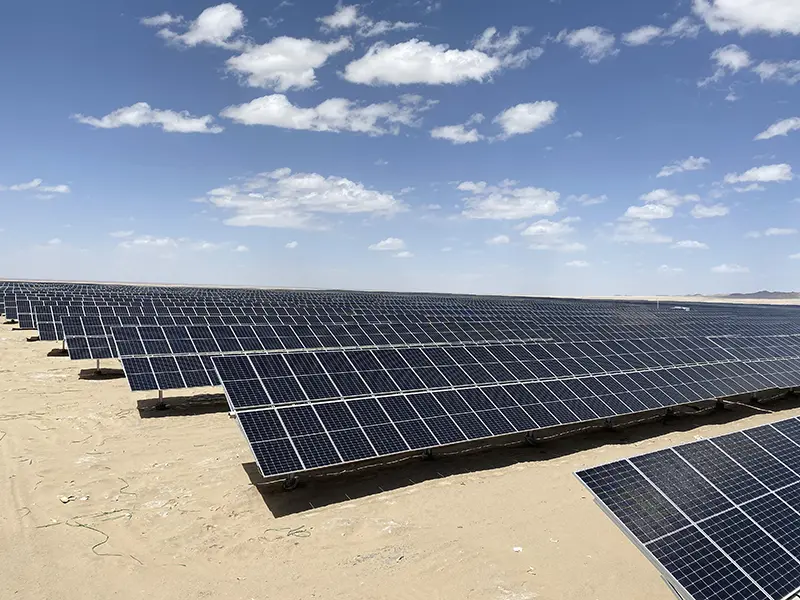
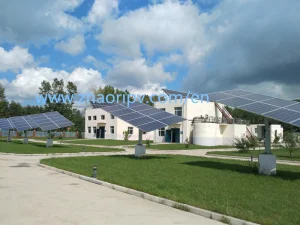
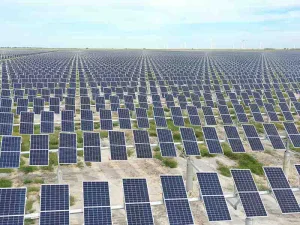
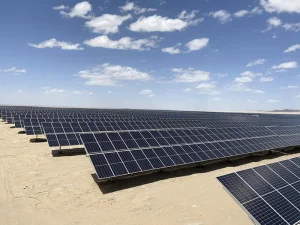
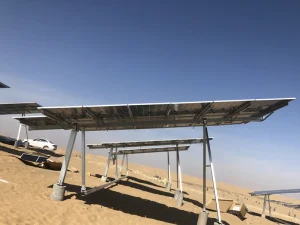
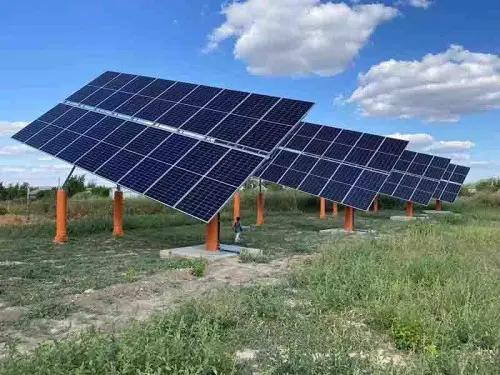
20MW Project in Desert Environment
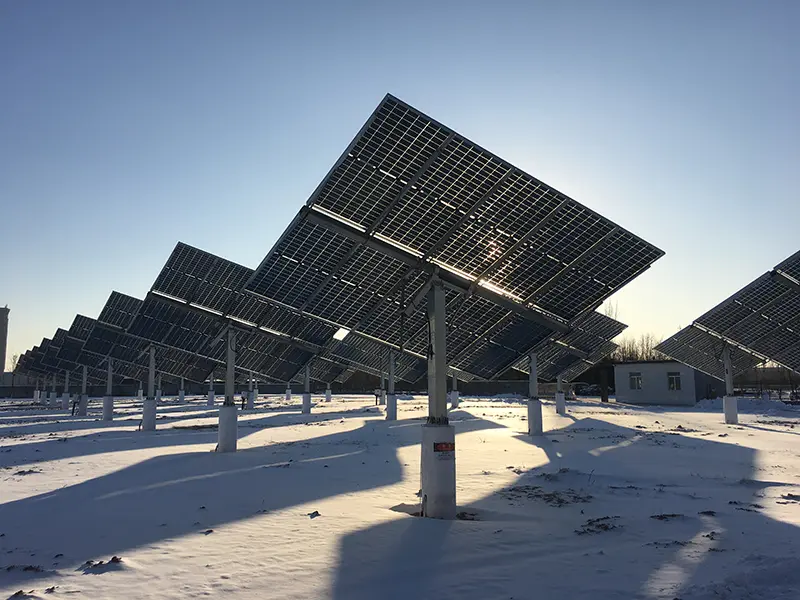
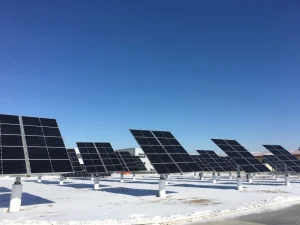
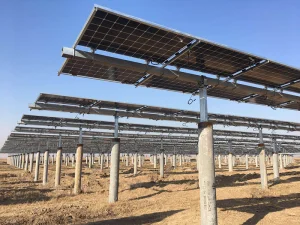
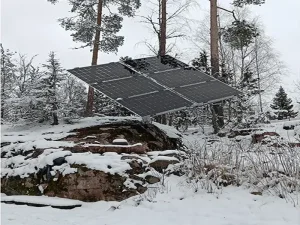
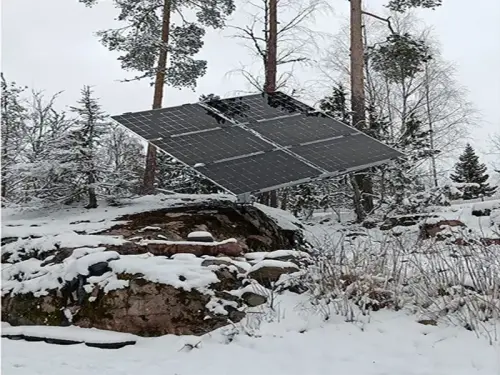
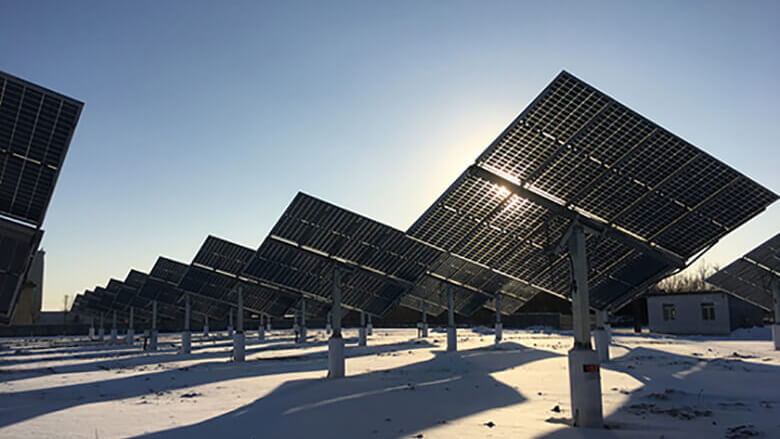
Solar Tracker Reliability After Heavy Snow
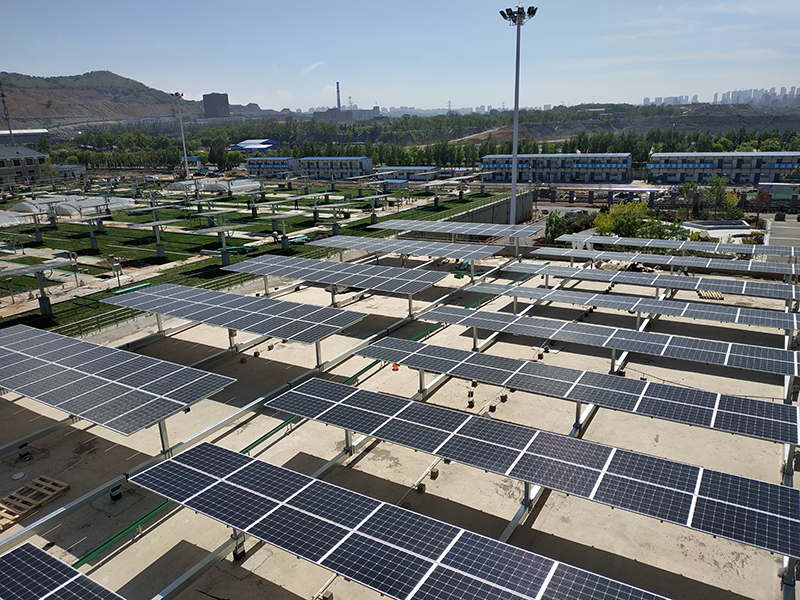
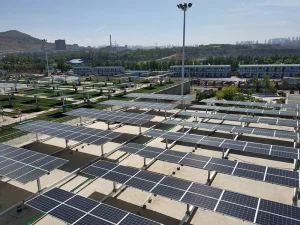
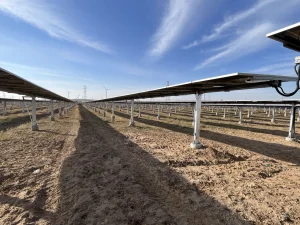
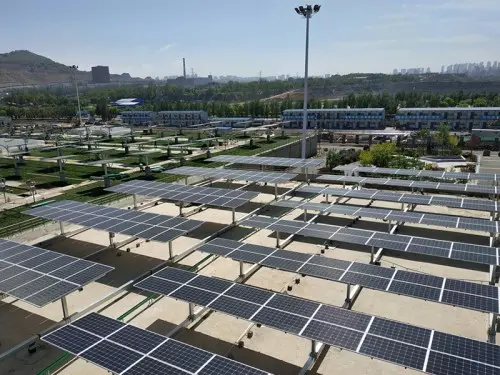
110MW Utility Project with Bifacial Modules
AI & Machine Learning Integration: We are pioneering the use of AI sensors to optimize tracking during cloudy days (diffuse radiation) and to execute self-protection stow modes during extreme weather events before they occur, utilizing predictive meteorological data.
Bifacial Optimization: Our next-generation trackers are designed with "zero-backtracking" algorithms and minimized structural shading to capture the maximum albedo gain from bifacial modules, adding another 5-10% to total energy output.
Wireless Control Systems: Reducing cabling costs through ZigBee or LoRa Mesh network communications between trackers, further driving down EPC costs.
The ZRD series represents the pinnacle of solar geometry. By tracking both the azimuth and altitude of the sun, these systems eliminate cosine losses almost entirely. The ZRD-10 is engineered for large-format modules, ensuring structural integrity through high-torque actuators and reinforced slewing drives.
A cost-effective hybrid, the ZRT tilted single axis (10°– 30° tilted) offers a unique solution for mid-latitude regions. By combining a fixed tilt with an active tracking axis, it provides a significant "boost" over traditional single-axis trackers without the full cost of a dual-axis drive.
Modern 2-axis trackers are designed for "low-maintenance" operation. We recommend a semi-annual inspection of the drive system and a check on the control software. Our lubrication-free bearings in specific joints further reduce O&M costs.
Our trackers include an automated "Stow Mode." When wind speeds exceed 18-22 m/s (customizable), the sensors trigger the system to move to a horizontal or optimized angle to minimize wind resistance and protect the structure.
While primarily designed for commercial and utility-scale projects due to their high efficiency, the ZRD-06 and smaller ZRD models are increasingly popular for "Solar Trees" and premium residential estates where land is limited but energy demand is high.
Depending on the local electricity tariff and solar radiation (DNI), most commercial projects see an ROI within 4 to 6 years, significantly shorter than the 25-year design life of the product.
From adjustable brackets to autonomous dual-axis systems.
 Zhaori