In the global transition toward renewable energy, the efficiency of photovoltaic (PV) systems is no longer just a technical metric—it is a financial imperative. Static solar installations are increasingly being replaced by intelligent Sun Tracking Systems that maximize irradiation capture throughout the day. By aligning solar panels with the sun's precise astronomical position, these systems can boost energy production by up to 15% to 35% compared to fixed-tilt structures.
As a pioneer in this sector, Shandong Zhaori New Energy Tech. Co., Ltd. (also known as Sunchaser Tracker) has spent over a decade perfecting the integration of structural durability and algorithmic precision. Our mission is to lower the Levelized Cost of Energy (LCOE) for global utility, commercial, and residential projects through "Simple, Reliable, and Effective" engineering.
Maximum energy gain compared to traditional fixed-tilt systems in high-latitude regions.
A Foundation Built on Innovation and Global Intellectual Property
Founded in June 2012, Shandong Zhaori New Energy is a high-tech powerhouse with 10 specialized departments including R&D, Quality Assurance, and Foreign Trade. Our team of 60+ technical experts focus exclusively on PV tracking for over a decade.
Equipped with CNC tools, laser cutters, and automatic welding robots, our facility produces 500MW monthly. We maintain strict ISO quality management across 300+ skilled workers.
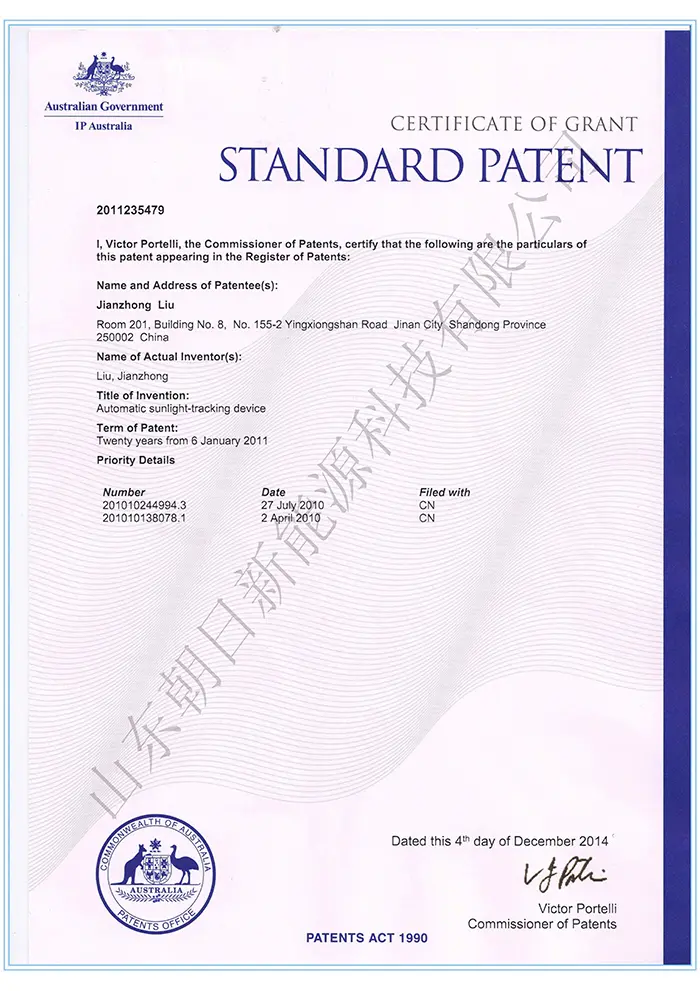
Recognized by the EPO, USA, Canada, Japan, and more. We hold 8 National Invention Patents and 30+ Utility model patents, ensuring our technology is unique and protected worldwide.
China has emerged as the global epicenter for solar tracking technology due to several macro-economic and technical factors:
Proximity to steel production, motor manufacturing, and electronic controller hubs allows for rapid prototyping and lower logistics costs, which we pass on to the client.
Chinese manufacturers like Sunchaser integrate the latest AI-driven astronomical algorithms with robust mechanical hardware, ensuring trackers operate in extreme climates (desert heat to mountain snow).
With massive production lines, we can handle utility-scale projects (100MW+) while maintaining the flexibility to customize brackets for specific residential roof constraints.
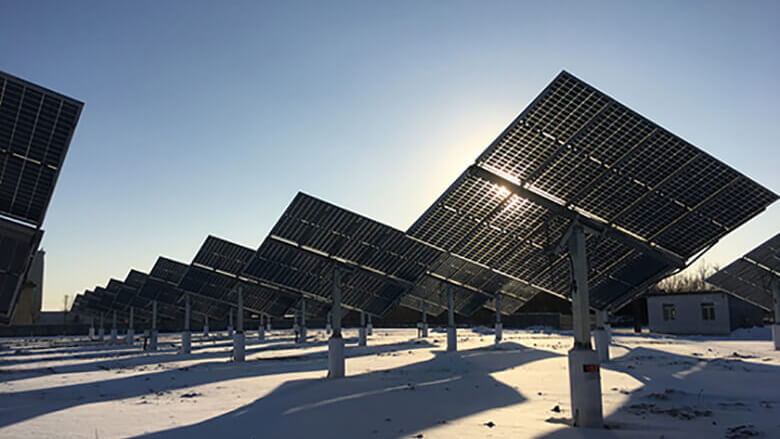
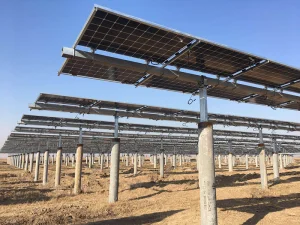
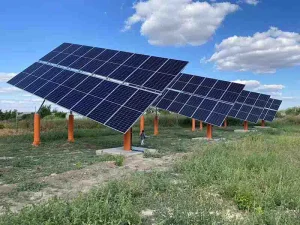
The ZRD series tracks both the azimuth and altitude angles of the sun. This is the ultimate solution for high-latitude regions or high-efficiency bifacial panel applications. By ensuring the panel is always perpendicular to the sun's rays, the ZRD-10 and ZRD-08 models maximize the input energy density per square meter.
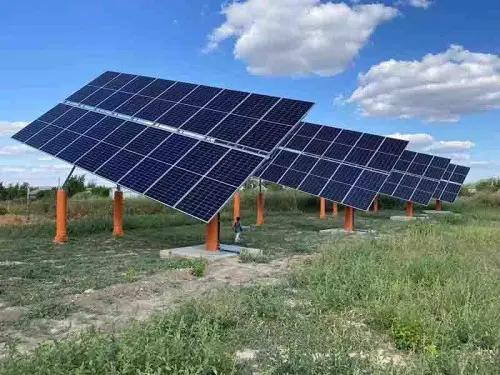
The ZRT system offers a strategic middle ground. With a tilted axis (10°– 30°), it tracks the sun’s azimuth while maintaining a fixed inclination. This setup typically mounts 10–20 panels per unit and is engineered for areas with uneven terrain where full dual-axis systems might be cost-prohibitive.
Engineered for Every Environment
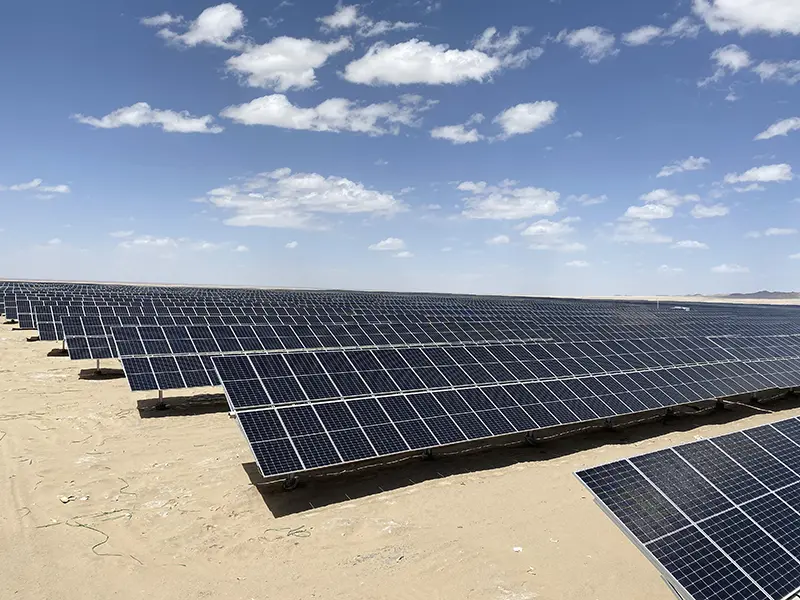
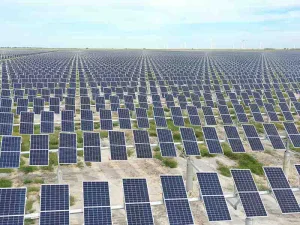
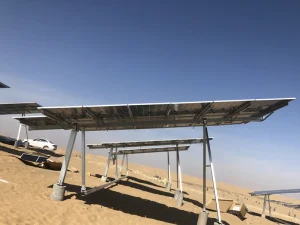
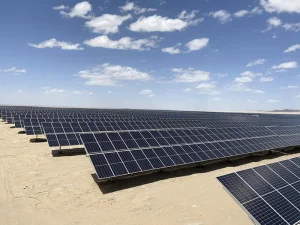
Deployments like our 20MW project in harsh desert conditions prove our systems' resistance to sand, dust, and extreme thermal cycling.
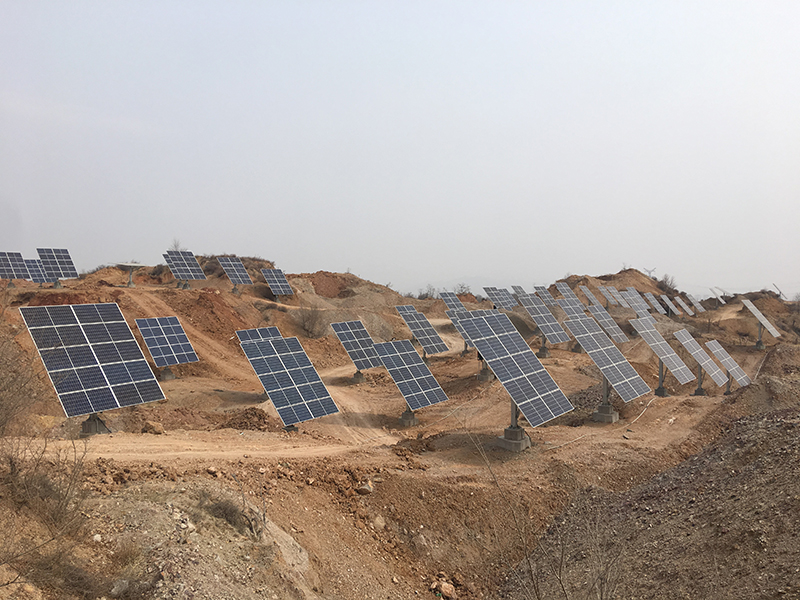
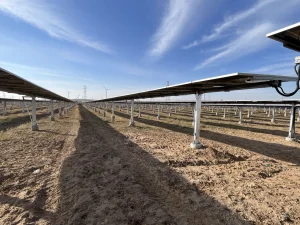
Our adjustable brackets and single-axis trackers are designed to accommodate complex slopes and north-south terrain variations.
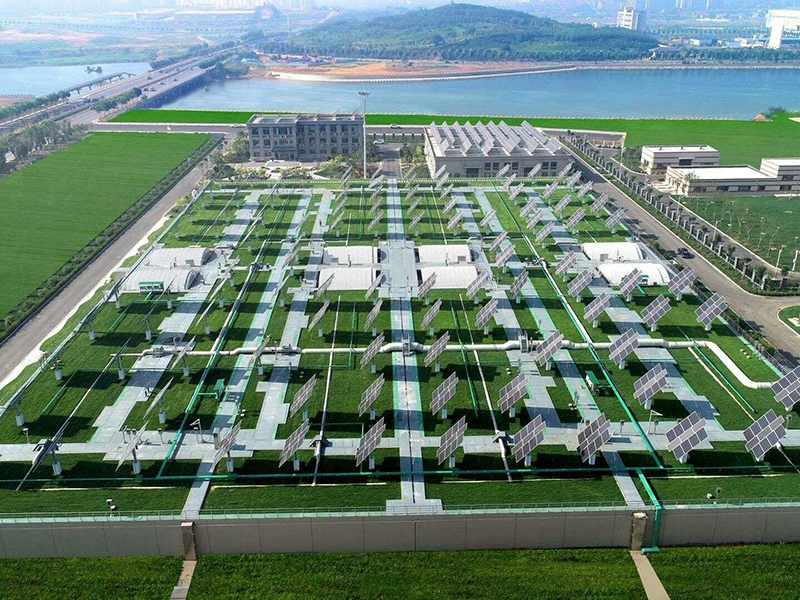
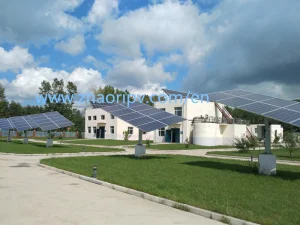
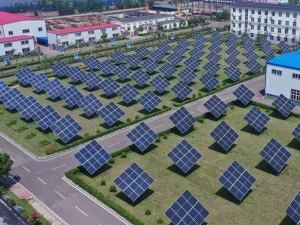
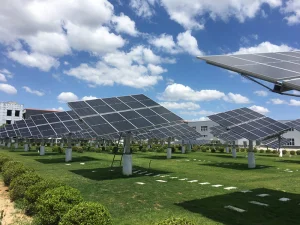
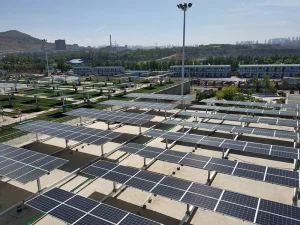
Maximizing limited space on industrial facilities (e.g., our Factory Project) through high-density tracking arrays.
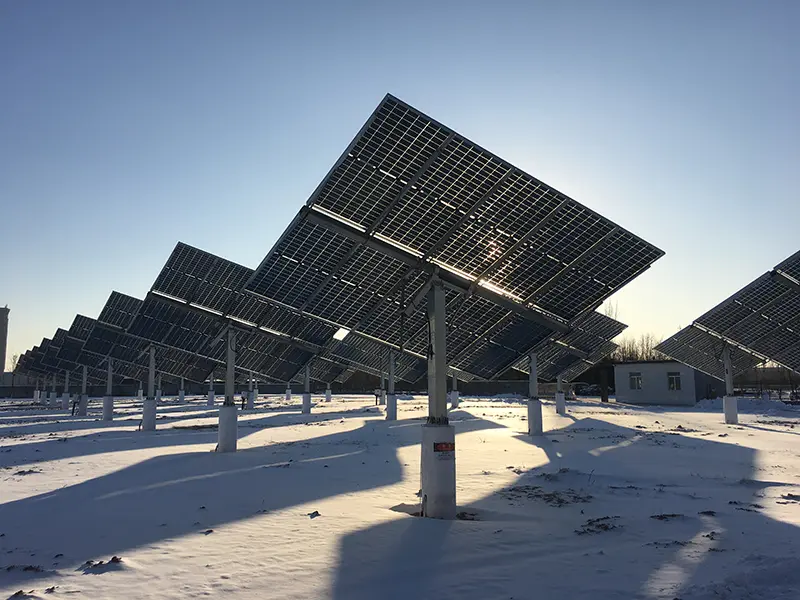
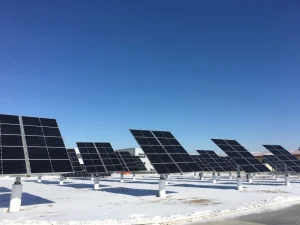
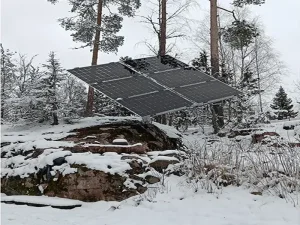
Demonstrated performance in snowy conditions, where tracking helps shed snow load and maintain production during winter months.
For global enterprises and Engineering, Procurement, and Construction (EPC) companies, selecting a solar tracker manufacturer involves rigorous due diligence. Based on our 10+ years of export experience, here is what determines success:
Expert Insights into Solar Tracking Technology
Single-axis trackers follow the sun from East to West, providing a substantial gain over fixed systems. Dual-axis trackers (like our ZRD series) follow the sun's East-West movement and its seasonal North-South elevation. Dual-axis provides the highest possible energy yield, often preferred for concentrated PV or high-latitude utility projects.
Our trackers are equipped with integrated sensors. In the event of high wind, the system automatically enters a "stow" position (flat) to minimize wind resistance. For snow, the tracking angle can be adjusted to prevent accumulation, protecting the structural integrity of the solar panels.
While tracking systems increase the initial CAPEX, they significantly decrease the LCOE. Depending on local electricity rates and solar irradiation levels, the ROI for the tracking component typically ranges from 2 to 5 years, while the system life exceeds 25 years.
Yes. Our 2P Flat Single Axis and Dual Axis systems are specifically optimized for bifacial modules, ensuring no structural shading on the rear side, thus capturing reflected light for an additional 5-10% gain.
353MW Flat Single Axis Tracker
Technical Mechanism Overview
Dual Axis Solar Tracker Project
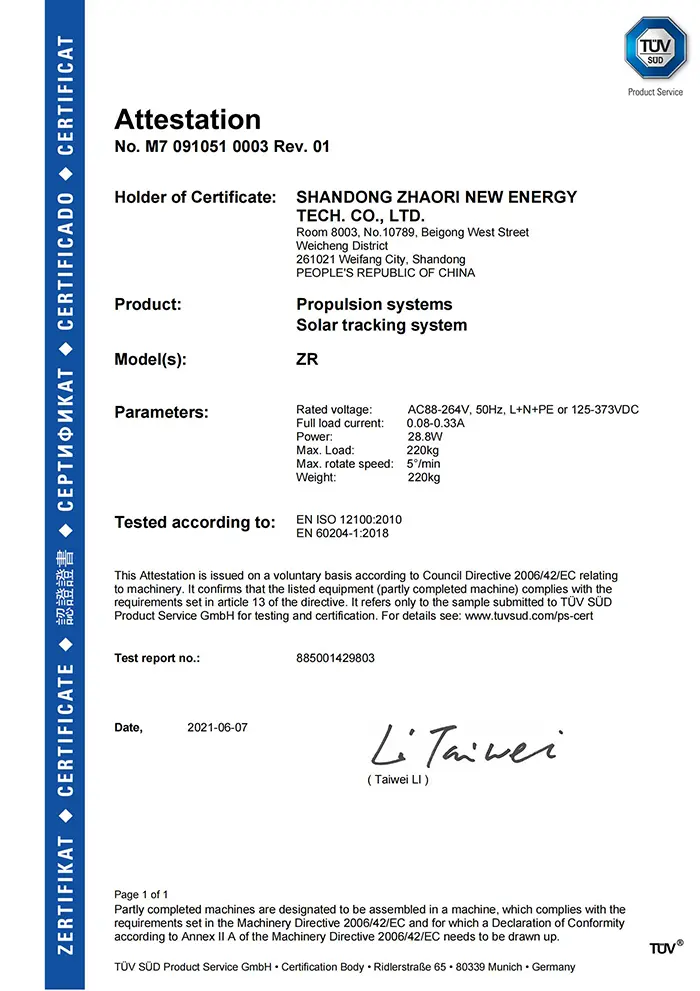
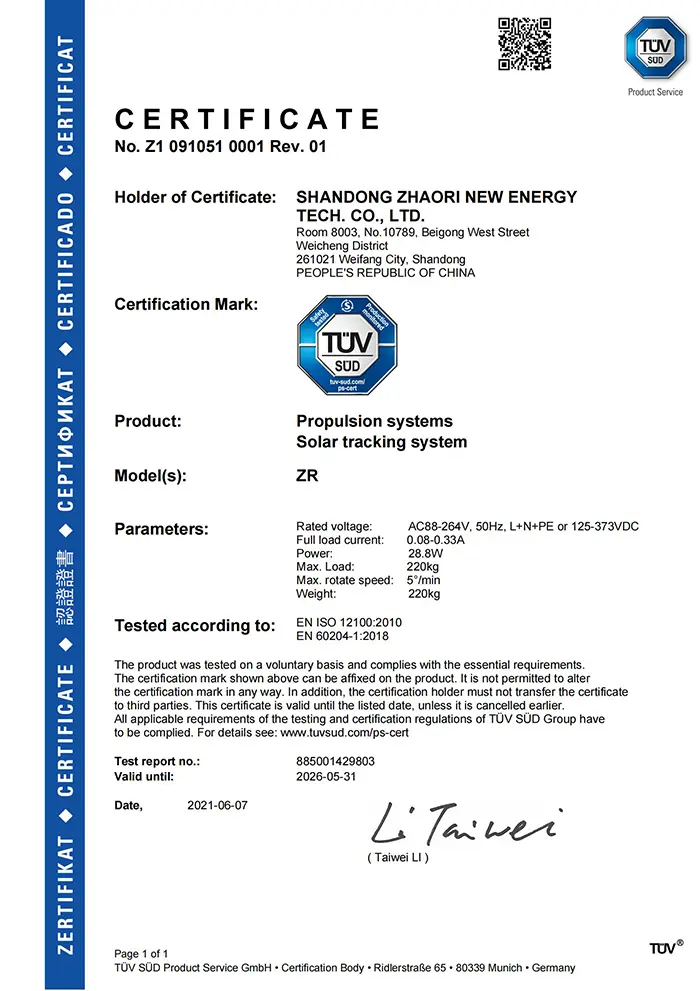
Our products have passed TUV, CE, and ISO certifications, meeting the stringent requirements of the global market.
 Zhaori