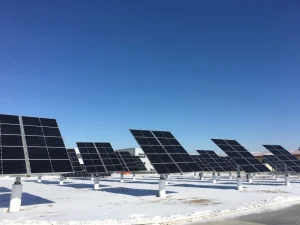
Decade-long design iteration ensuring robust performance in high-wind zones and challenging environments.
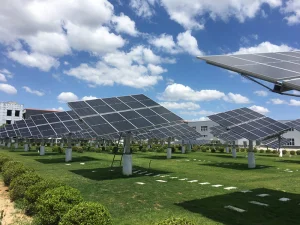
Direct factory supply featuring dual-axis precision tracking for up to 35-40% yield optimization.
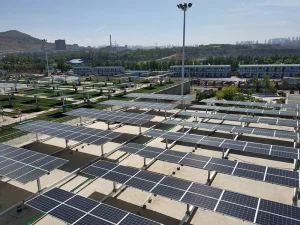
Flexible configuration supporting 10-60 panels per row with linkable row mechanics for large-scale grids.
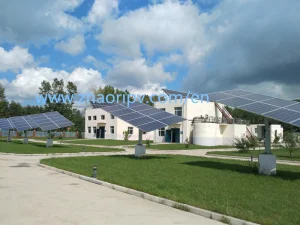
Cost-efficient tracking solution ideal for emerging utility zones and high-wind agricultural regions.
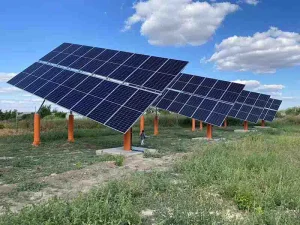
Tilted axis design (10°–30°) tracking azimuth solar changes, enhancing power generation by 15%–25%.
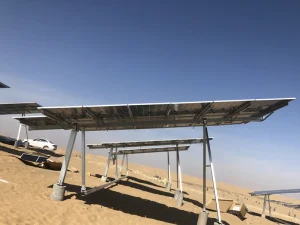
Engineered tracking solutions configured for harsh terrains with structural fatigue mitigation.
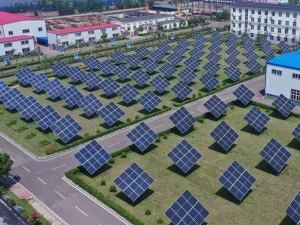
Advanced automatic control and backtracking algorithms to eliminate shade interference dynamically.
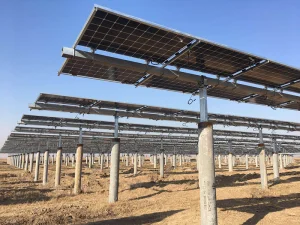
High-reliability tracking optimized for utility projects, showing a 15% to 30% yield boost over fixed structures.
Founded in June 2012, Shandong Zhaori New Energy operates with 10 internal business units—including a dedicated R&D team, technical division, and QA department. Our staff features over 60 professional technology-talented specialists focused on photovoltaic power stations and tracking innovation for over a decade.
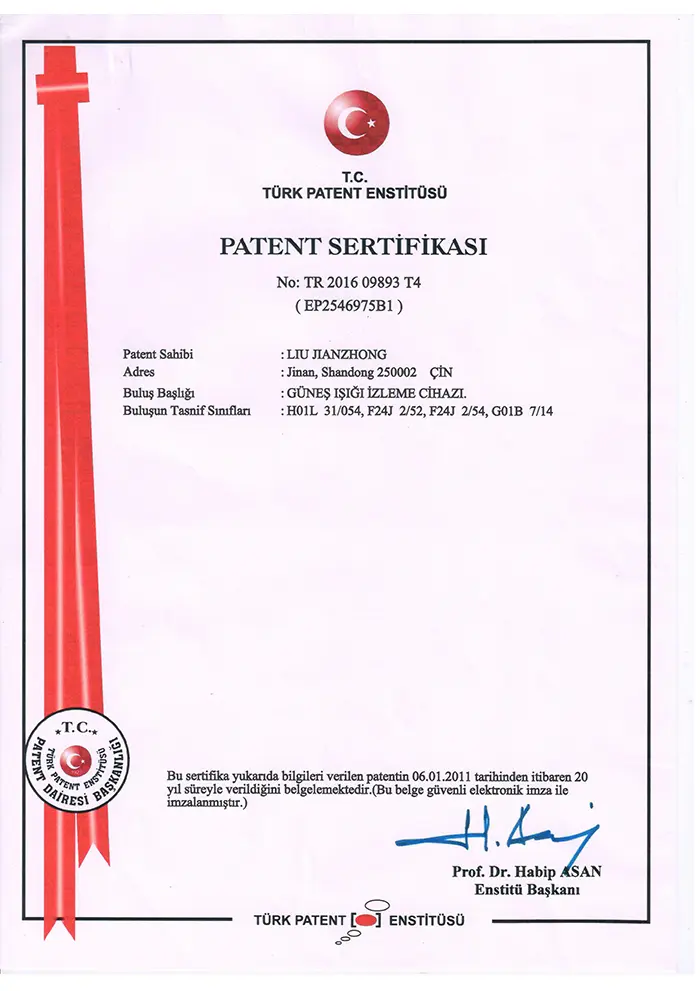
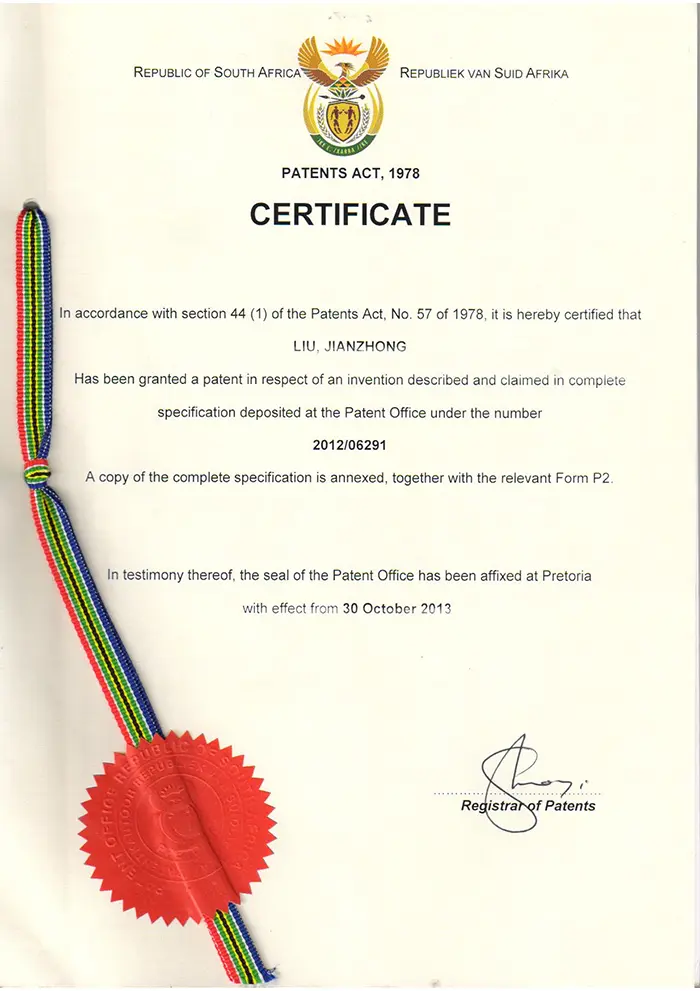
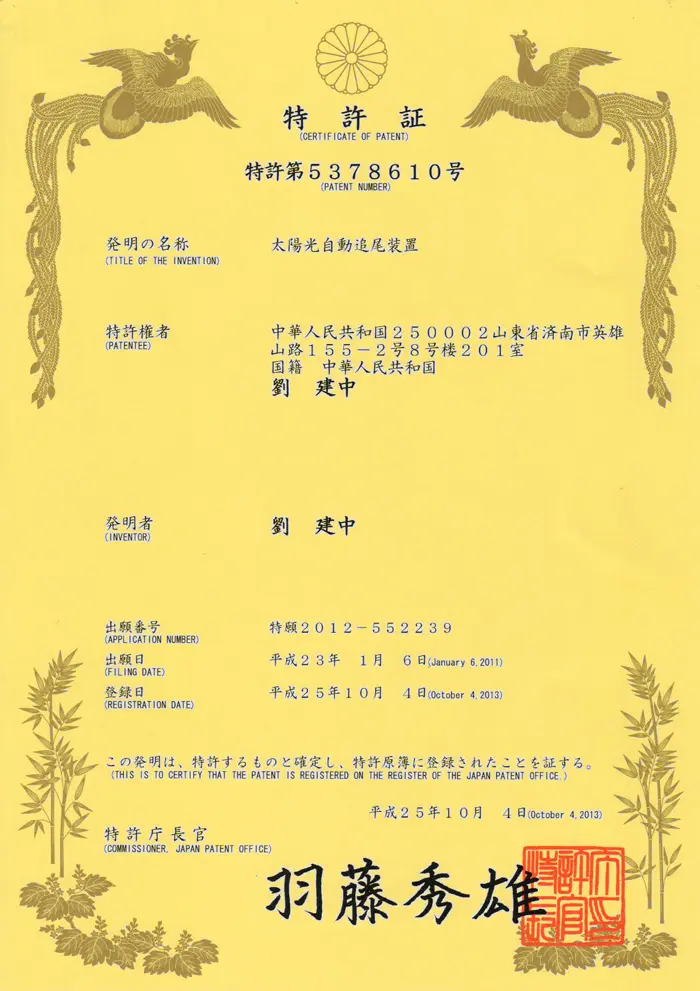
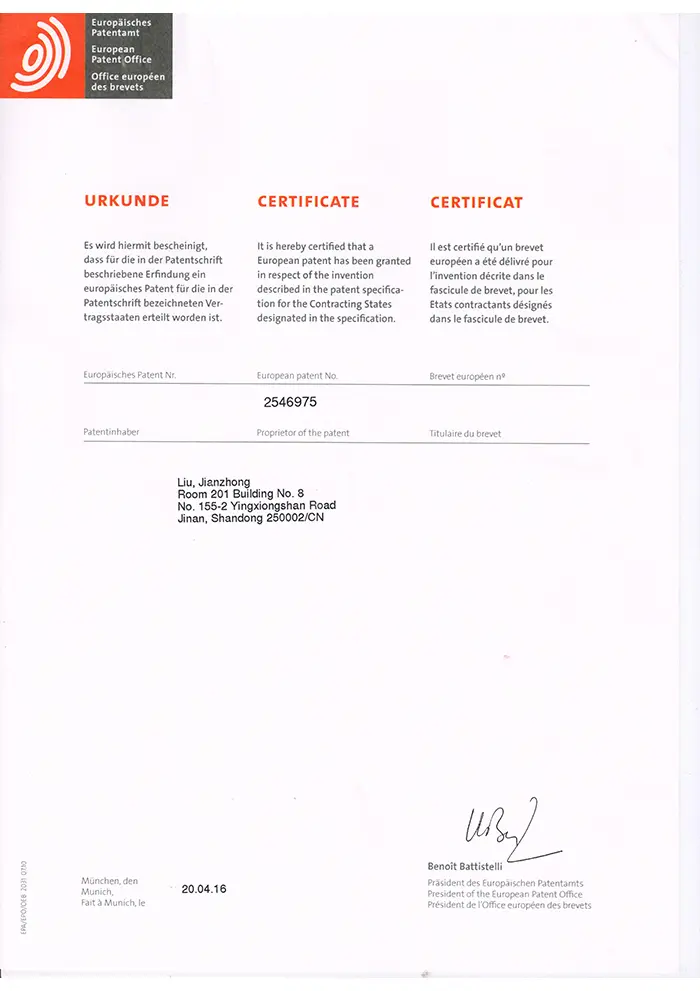
We build our designs on independent intellectual property. Our proprietary systems have secured patents across the Europe Patent Office, USA, Canada, Australia, Japan, South Korea, Thailand, India, Brazil, and South Africa, along with 8 Chinese National Invention Patents and over 30 Utility model patents.
We design tracking mechanisms around a core mandate: "More simple, more reliable, and more effective." This design language minimizes moving parts, lowers failure points, and reduces long-term field O&M overhead.
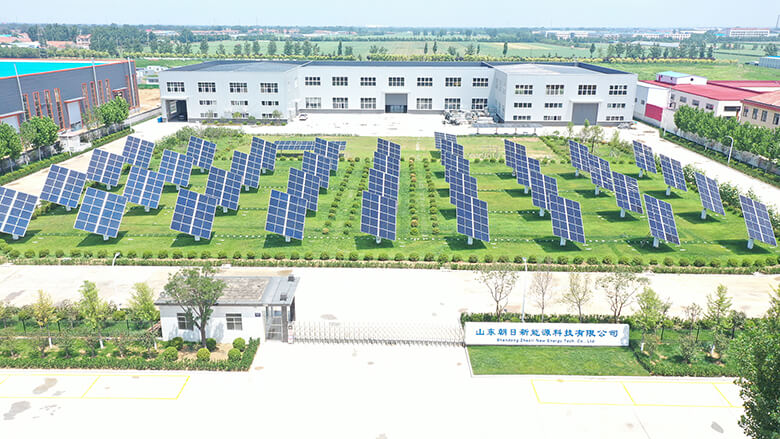
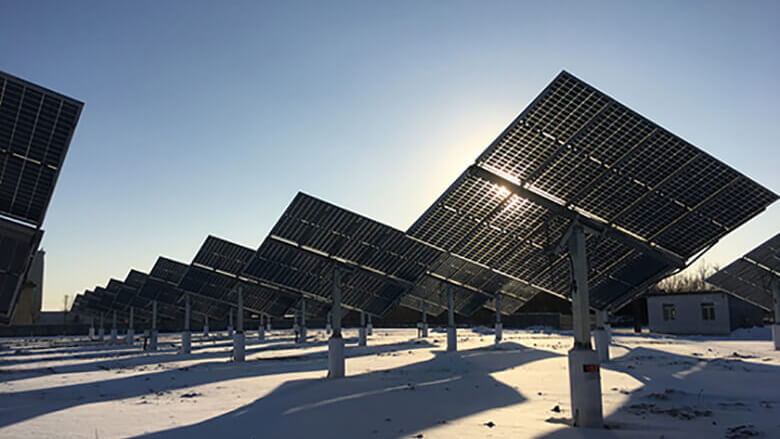
Our facility spans 50,000 square meters and operates dozens of production lines equipped with advanced CNC machinery, laser cutting units, plasma cutters, and automated welding robots. This enables a robust output of 500MW per month.
We execute every stage under strict quality management systems (ISO, CE, TUV certifications). Process controls govern raw material inspection, high-tolerance cutting, precision welding, forming, hot-dip galvanizing, and packaging, ensuring product integrity for 25-year system lifespans.
Global utility developments lean heavily toward tracking technology to improve return on investment. Developers select 1P trackers to simplify installation on uneven terrain, while 2P designs optimize bifacial gain by reducing rear structural shading.
Integrating bifacial modules with single-axis tracking systems delivers significant energy yield increases. Our design ensures zero obstruction on the rear side of the PV module, unlocking real-world albedo performance.
Modern EPC procurement specifications require dynamic safety systems. Our tracking arrays feature real-time wind-tunnel tested stowing mechanisms that protect modules from wind torsional flutter during storms.
We assist developers, EPC partners, and asset owners globally to meet local building codes, grid requirements, and structural safety guidelines.
Our products carry certifications including TUV, CE, and ISO. We ensure compliance with European, American, and APAC wind and seismic load standards, allowing for faster local project permitting.
We modify tracking parameters for difficult terrains, including irregular slopes, high-snow regions, and deserts, ensuring stable operation under diverse soil and grade profiles.
We provide remote engineering assistance, structural calculations, and regional field support. This ensures local maintenance crews can install and commission systems quickly.
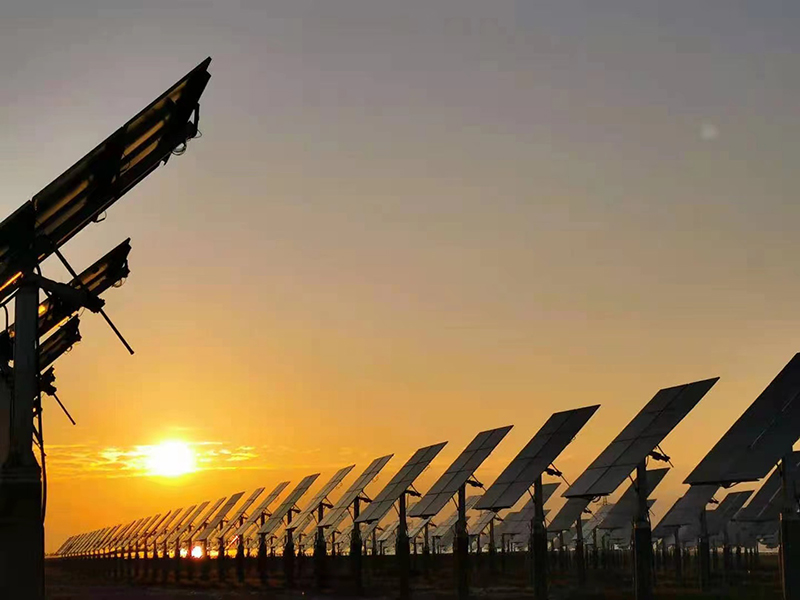
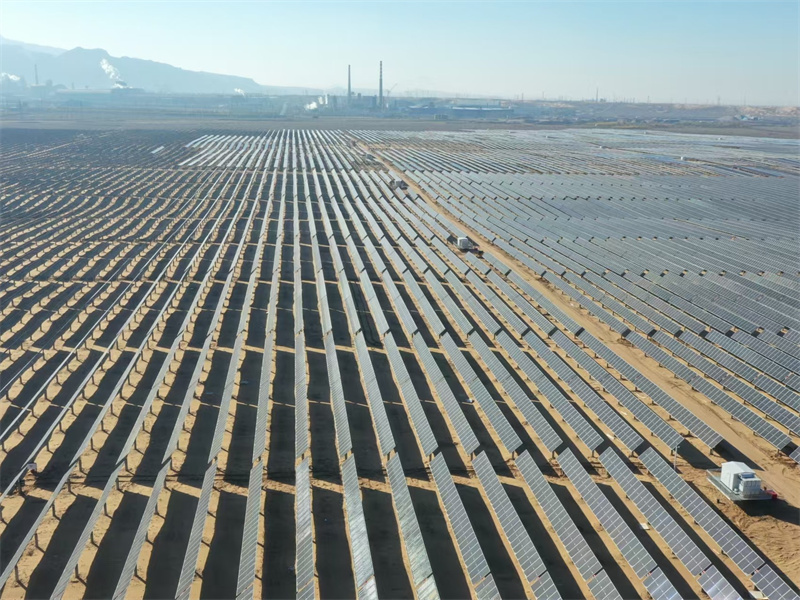
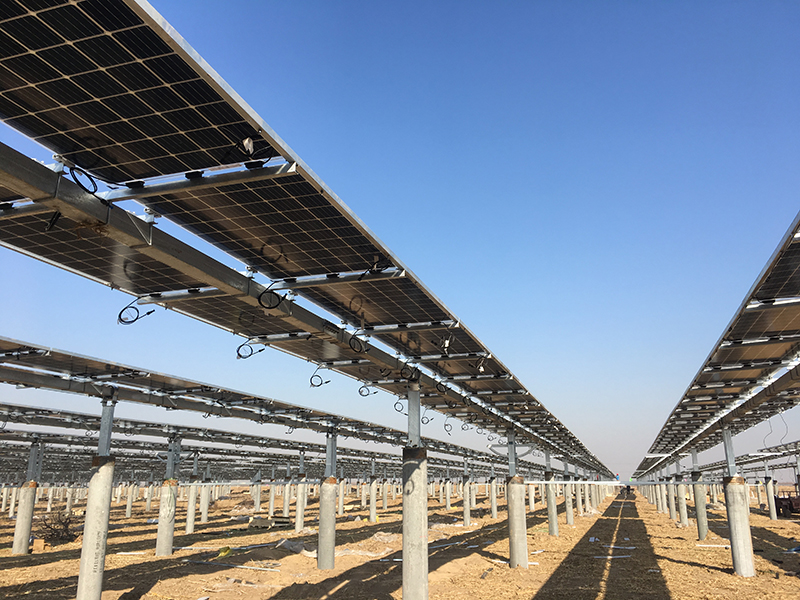
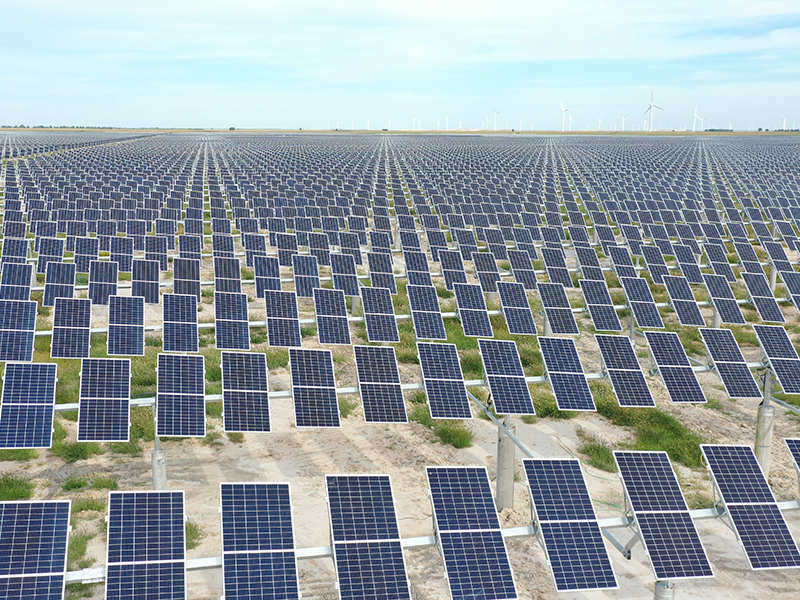
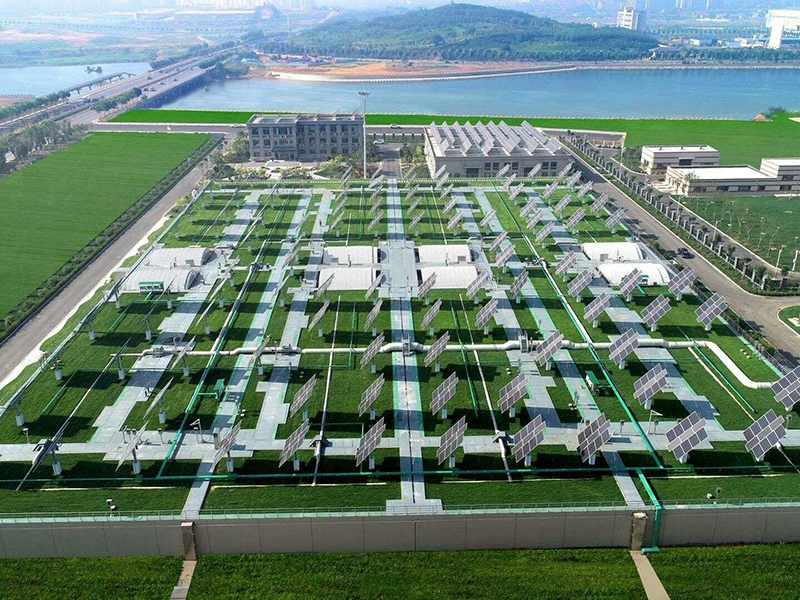
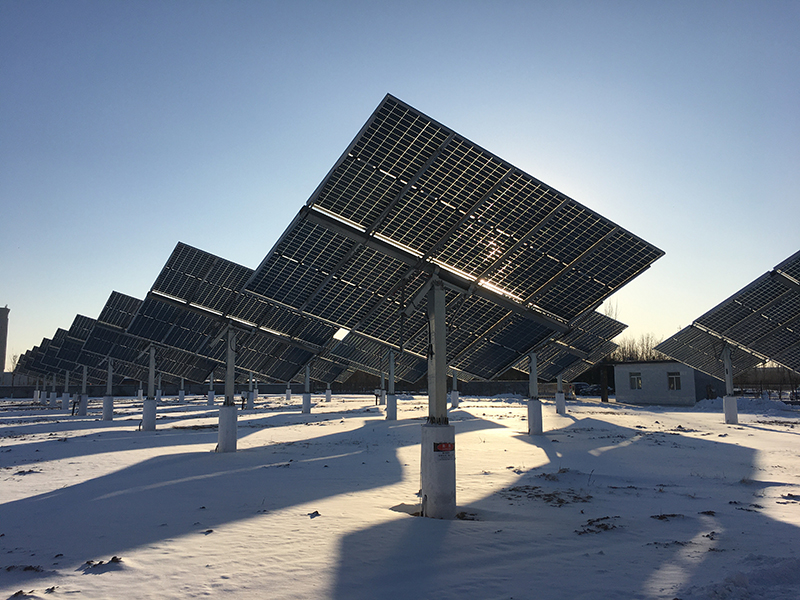
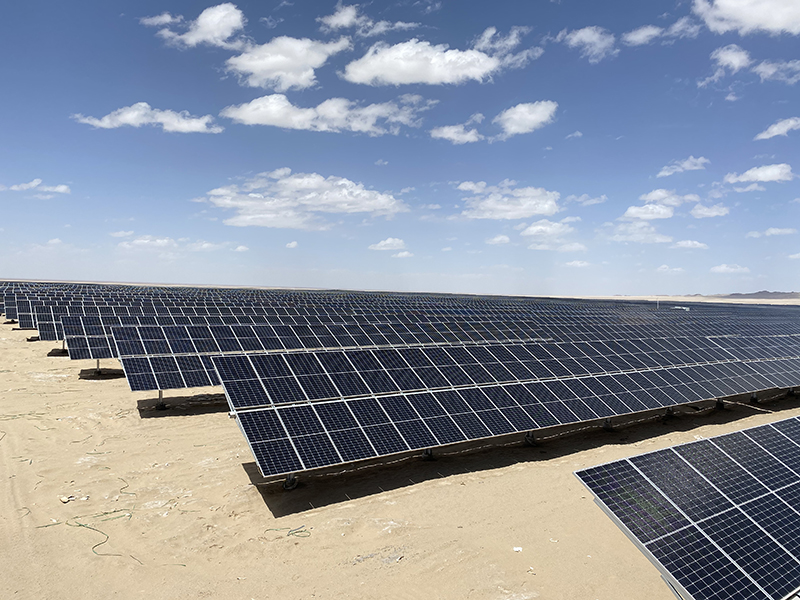
Our system designs have passed strict testing protocols to guarantee long-term operational resilience.
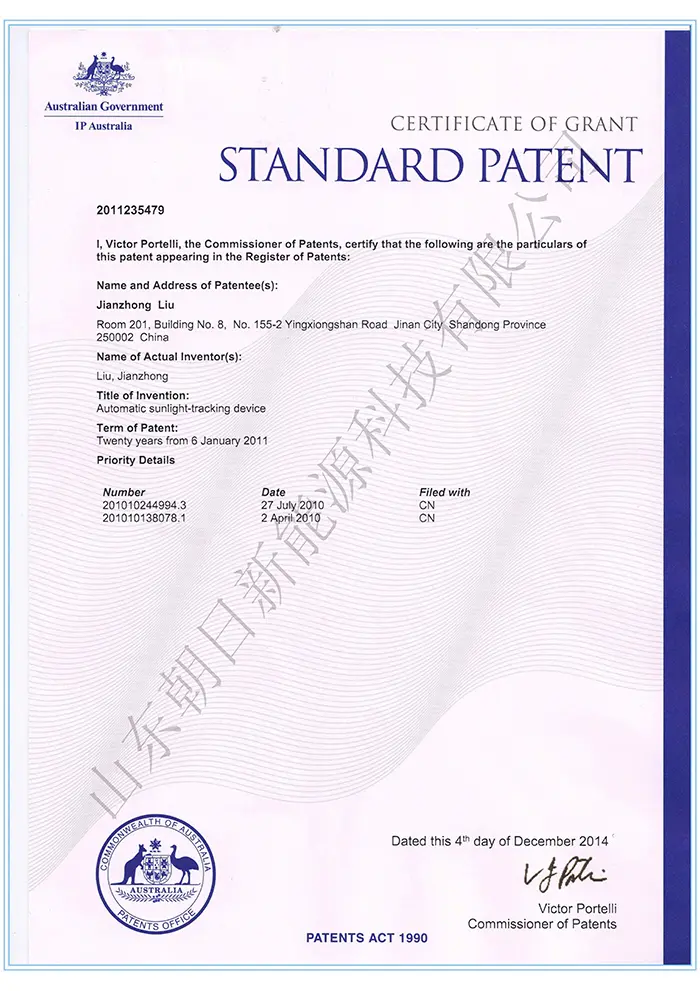
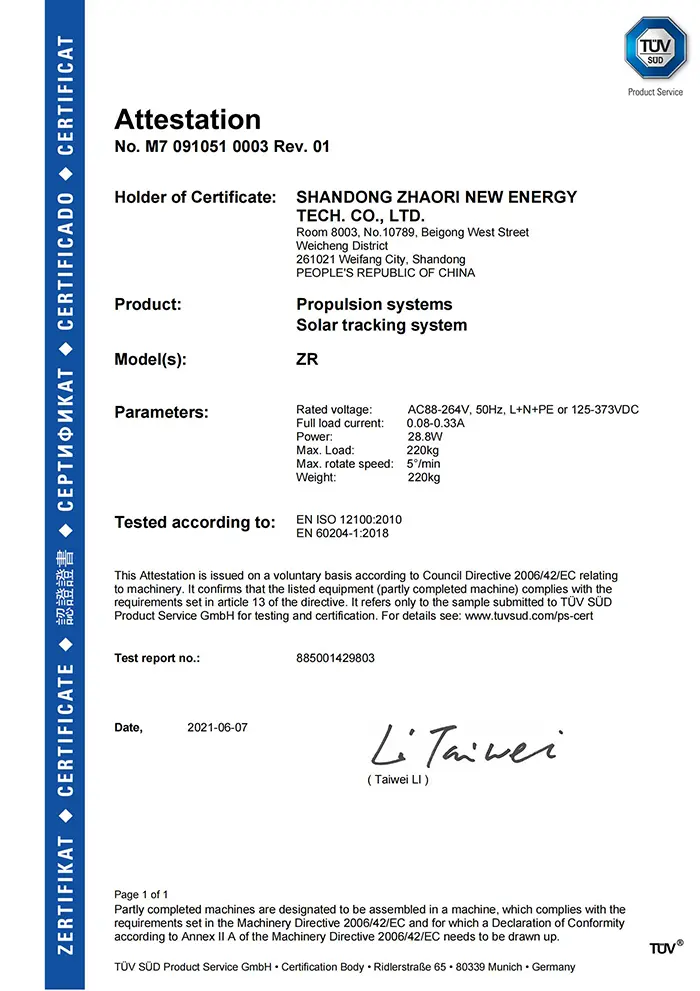
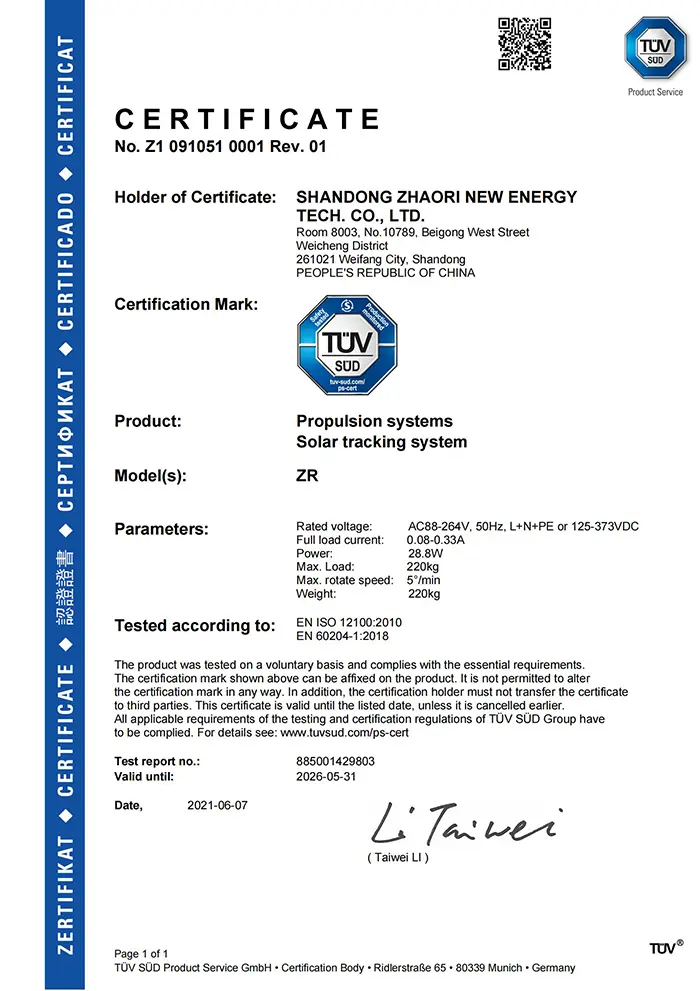

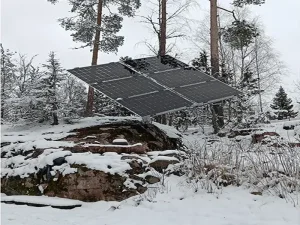
Compact design for smaller layouts, offering dual-axis tracking precision to optimize regional yield.
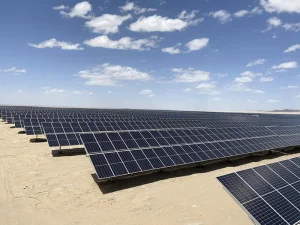
Cost-efficient seasonal tilt adjustments designed for regions with variable summer and winter solar angles.
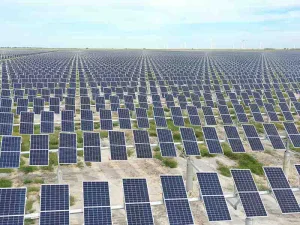
Combines single-axis rotation with an inclined module angle to optimize yields in mid-to-high latitude projects.
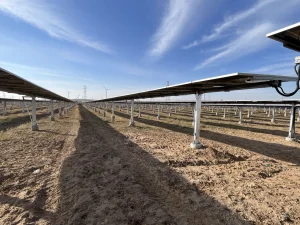
A popular utility choice designed for stability in high wind loads and simplified site assembly.
Decade-long design iteration ensuring robust performance in high-wind zones and challenging environments.
Flexible configuration supporting 10-60 panels per row with linkable row mechanics for large-scale grids.
Tilted axis design (10°–30°) tracking azimuth solar changes, enhancing power generation by 15%–25%.
High-reliability tracking optimized for utility projects, showing a 15% to 30% yield boost over fixed structures.
 Zhaori