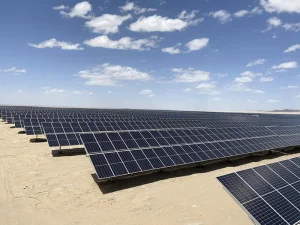
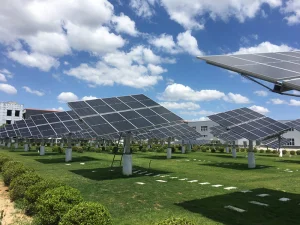
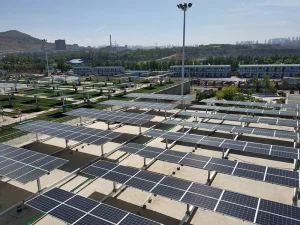
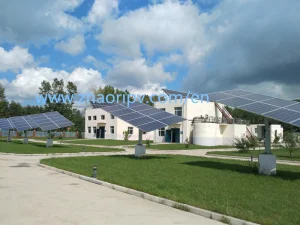
In the current global energy transition, Self-Tracking Solar Panels have evolved from a niche premium technology to a mainstream industrial necessity. As the world pushes for Net-Zero emissions, the focus has shifted from mere "solar adoption" to "efficiency maximization." Traditional fixed-tilt systems are increasingly being replaced by smart tracking solutions that optimize the angle of incidence throughout the day.
Market data suggests that the global solar tracker market is expected to grow at a CAGR of over 15% through 2030. This growth is driven by massive utility-scale projects in North America, the Middle East, and Asia-Pacific regions, where high solar irradiance makes the 30% to 40% energy gain from dual-axis systems commercially irresistible.
The industry is moving toward "Smart Tracking," integrating AI and machine learning to predict cloud cover and adjust panel angles to capture diffused light, further increasing LCOE (Levelized Cost of Energy) efficiency.
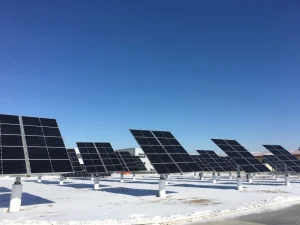
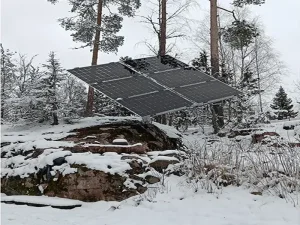
From the snow-heavy terrains of Northern China to the extreme heat of Middle Eastern deserts, self-tracking panels are now built with environment-specific materials and auto-stow features for wind and snow protection.
With the falling costs of sensors and motors, the ROI period for self-tracking systems has dropped to under 5 years in many regions, making them a preferred choice for commercial and industrial (C&I) investors.
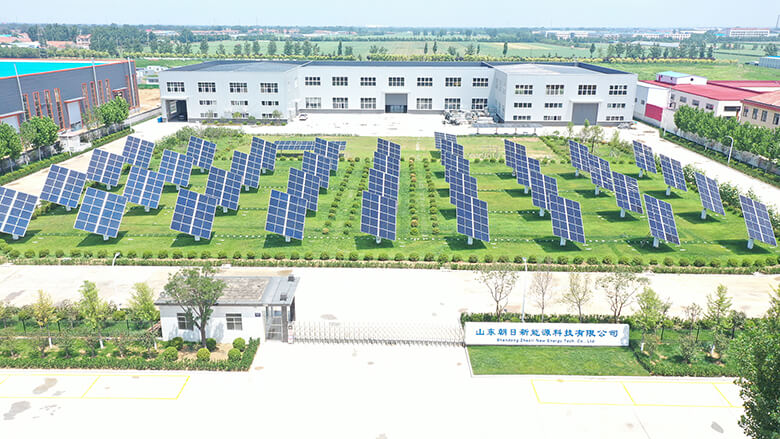
Founded in June 2012, Shandong Zhaori is a high-tech and new energy leader built on a foundation of independent intellectual property rights. With over 60 professional technology talents and a decade-long focus on photovoltaic power stations and solar tracking technology, our team is at the forefront of the renewable revolution.
Our factory utilizes CNC machine tools, laser cutting machines, and automatic welding robots to ensure precision. Every product undergoes strict quality control, from raw material screening to post-processing and anti-rust treatment, adhering to global quality management standards.
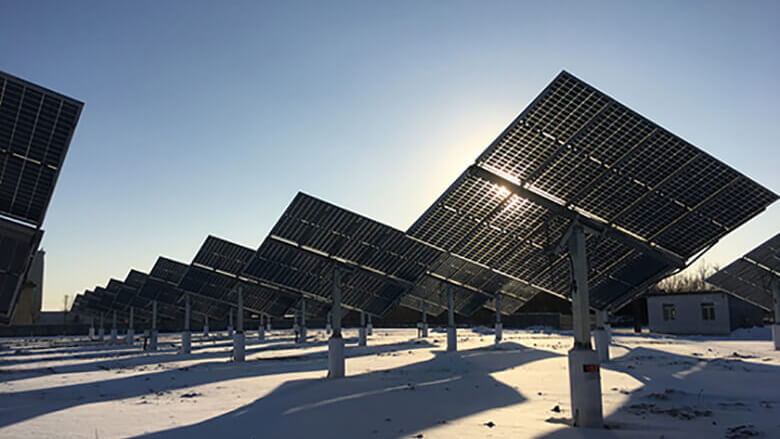
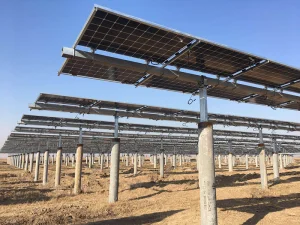
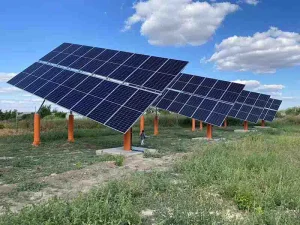
Designed for maximum yield. Our ZRD series tracks both the azimuth and altitude of the sun, ensuring the panels are always perpendicular to the solar rays. This results in the highest possible energy density per square meter.
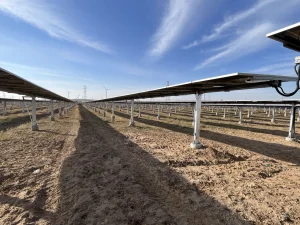
The perfect balance of cost and performance. The ZRP and ZRT series offer significant gains (15%-30%) over fixed systems with lower mechanical complexity and maintenance requirements.
Integration of IoT sensors for real-time performance monitoring and bifacial panel optimization, allowing the tracker to adjust not just for direct sunlight but for ground-reflected albedo light.
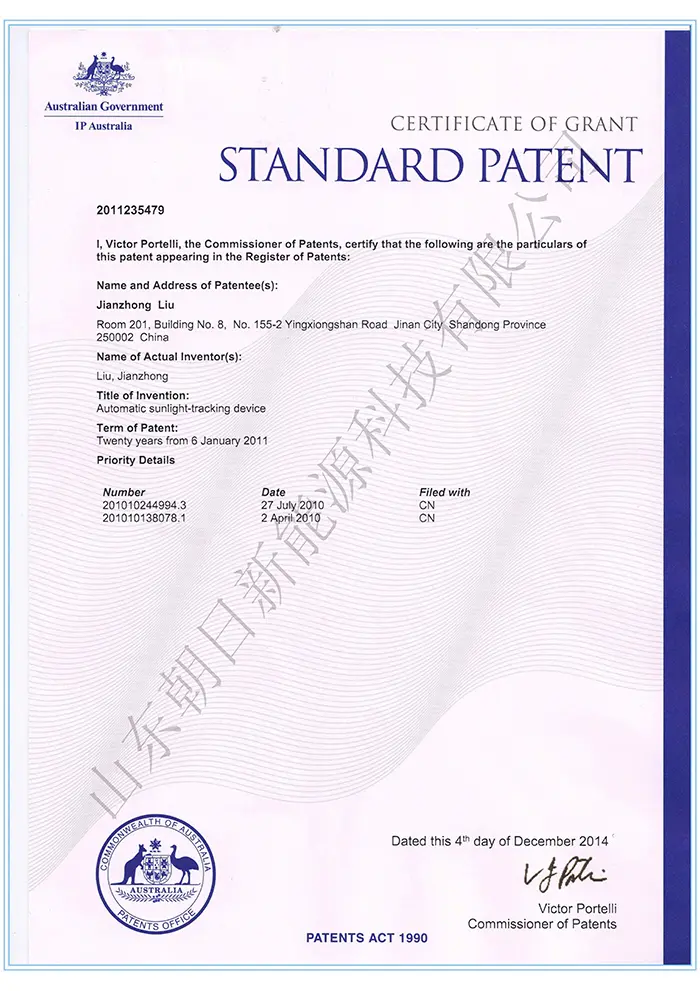
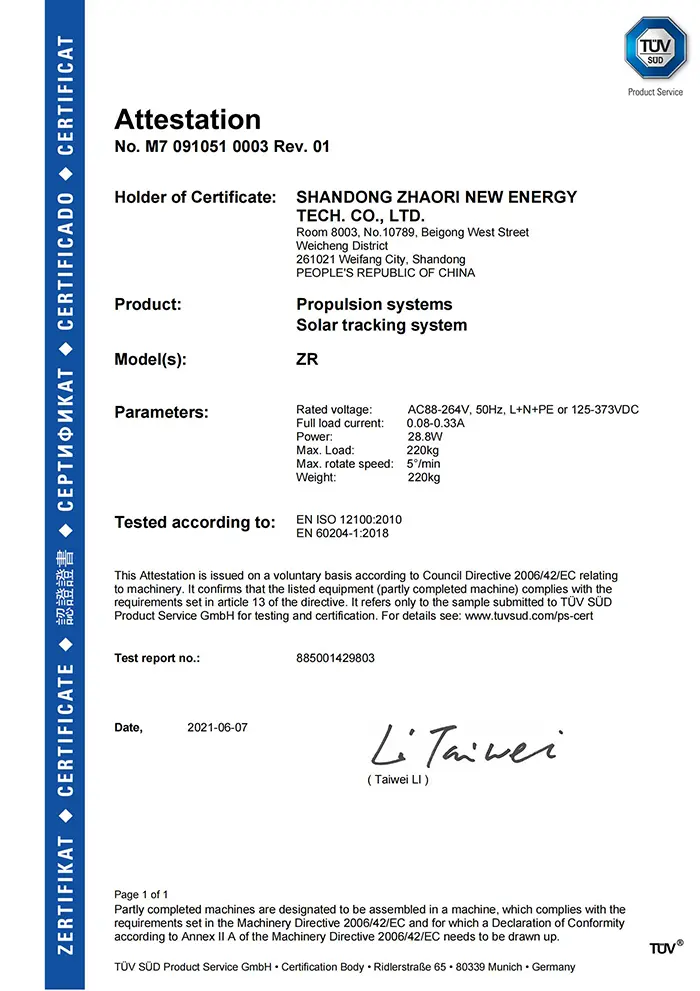
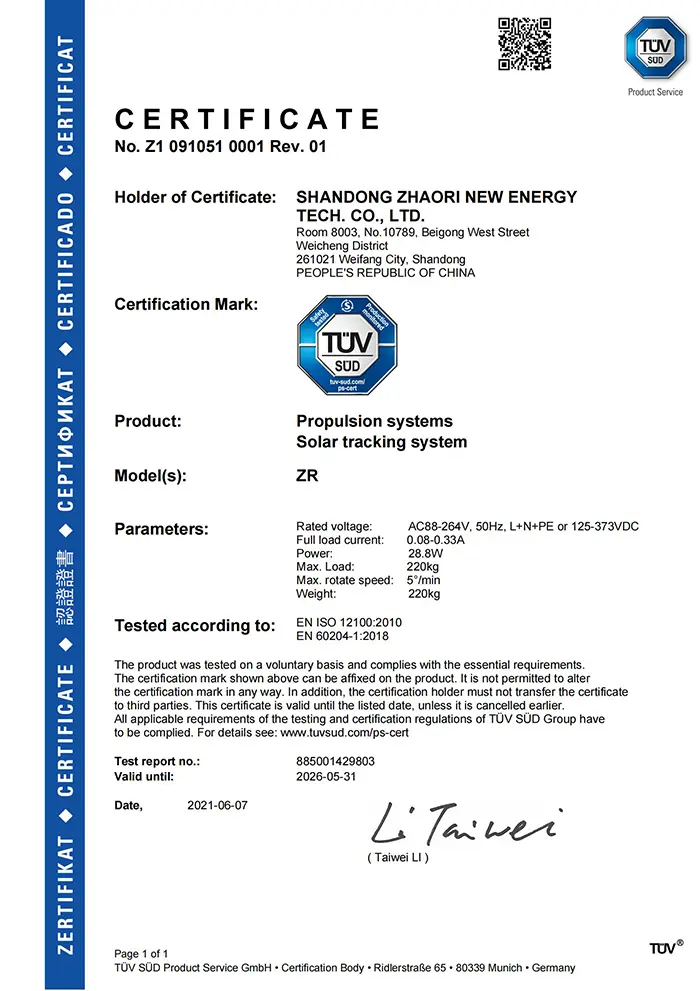
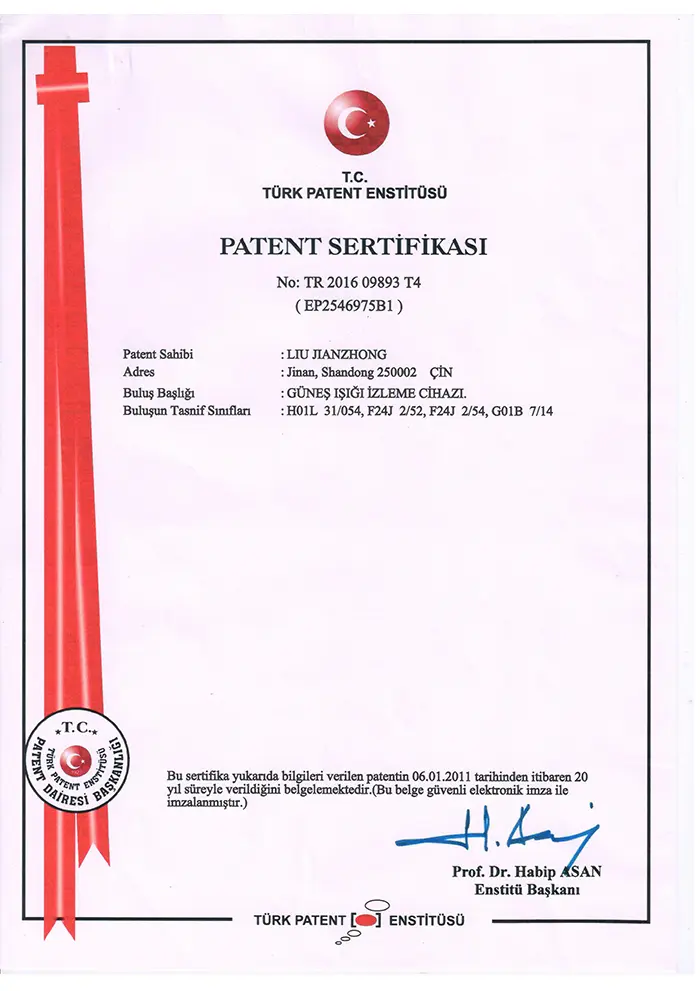
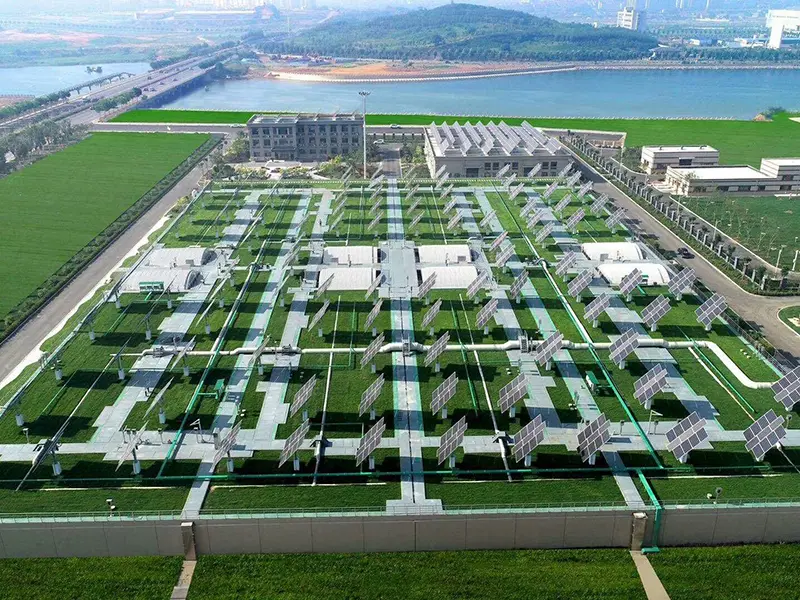
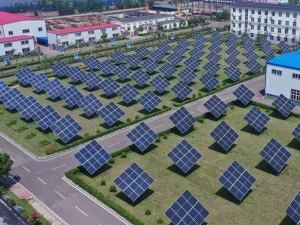
Optimizing roof-top and ground space for zero-carbon manufacturing.
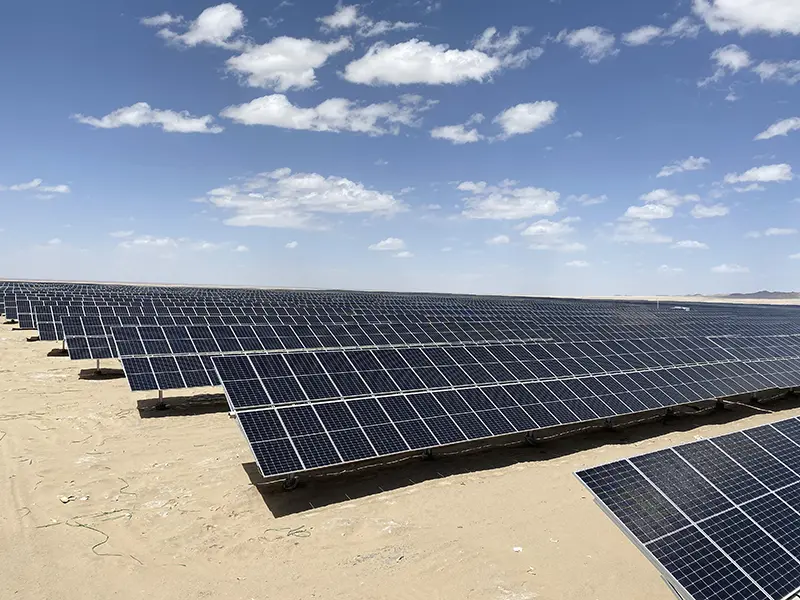
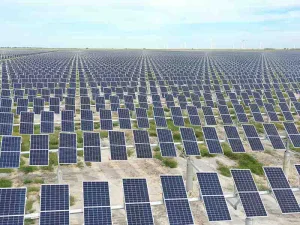
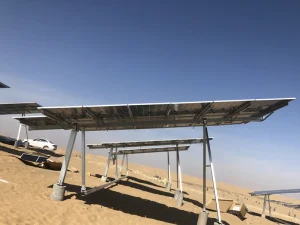
High-durability trackers designed for sand and extreme thermal variance.
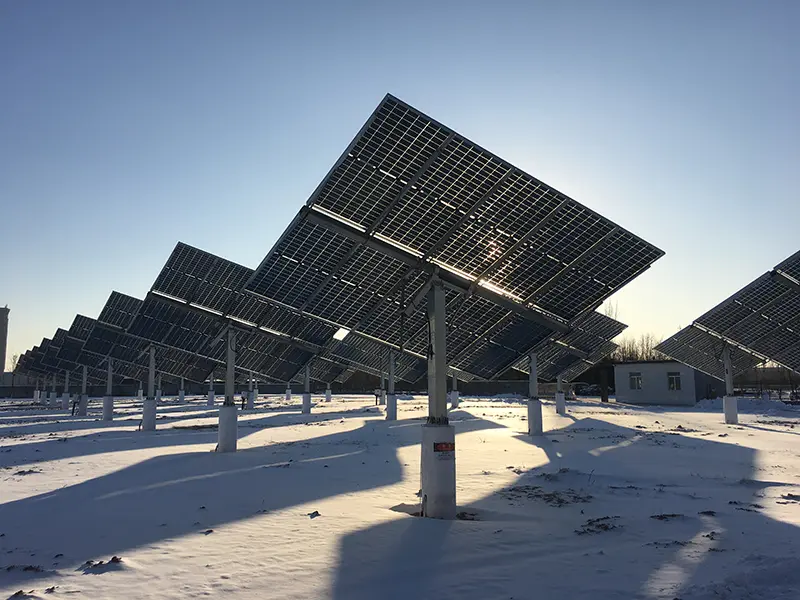
Automatic snow shedding features to maintain production in winter.
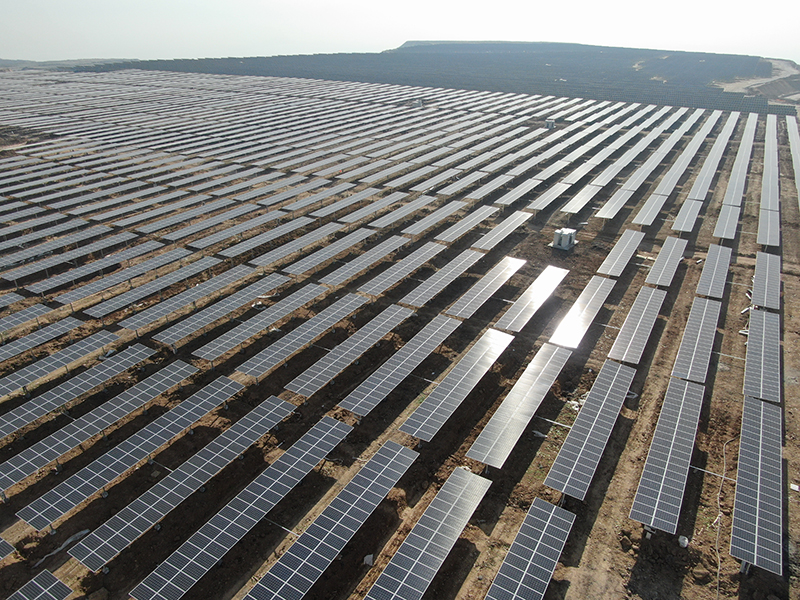
Integrating single-axis trackers with bifacial panels for 45%+ gain.
A: While Single-Axis systems track the sun from East to West, Dual-Axis systems (like our ZRD-10) also adjust for the sun's seasonal altitude. This can yield up to 40% more energy compared to fixed systems, particularly in regions far from the equator where the sun's altitude changes significantly throughout the year.
A: Modern trackers are equipped with a "Stow Mode." When wind sensors detect speeds above a safety threshold (e.g., 18-22 m/s), the panels automatically move to a horizontal position to minimize wind load. For snow, they can tilt to a maximum angle to allow snow to slide off naturally.
A: Absolutely. Our Zhaori systems are designed for "Simple, Reliable, Effective" operation. With brushless motors and low-friction bearings, maintenance intervals are often years apart. The 25-40% increase in electricity generation far outweighs the 2-3% increase in O&M costs.
A: Yes, our smart controllers support standard industrial communication protocols (RS485, LoRa, Zigbee), allowing for seamless integration into centralized plant management systems for real-time monitoring and remote control.
 Zhaori