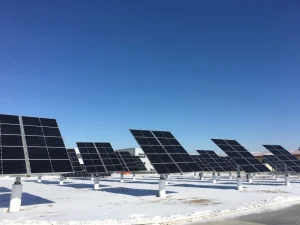
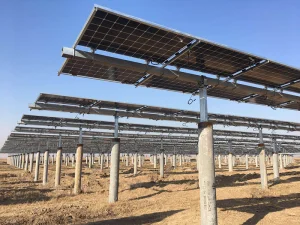
The global shift toward renewable energy has transformed the Single-Axis Tracker (SAT) from a niche utility component into the backbone of modern solar infrastructure. In 2024, procurement requirements have moved beyond simple hardware costs. International EPCs (Engineering, Procurement, and Construction) and solar developers now prioritize Information Gain and Operational Resilience.
Today's procurement needs are driven by three primary factors:
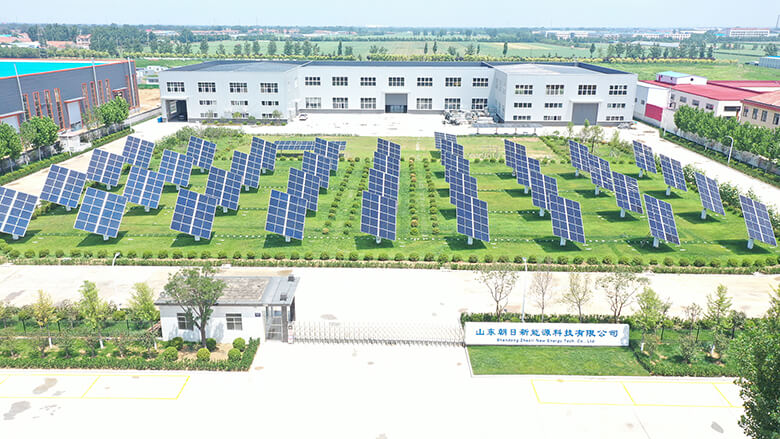
Shandong Zhaori New Energy Tech. Co., Ltd. is a high-tech and new energy company based on independent intellectual property rights. Founded in June 2012, we have established a decade-long legacy of innovation in photovoltaic power stations and solar tracking technology.
Our organizational structure is designed for excellence, comprising 10 specialized departments including R&D, Technical, Engineering, Production, and Quality Assurance. With over 60 professional technology-talented employees, our team focuses on the intersection of structural mechanics and digital control systems to provide the world's most reliable tracking solutions.
Our factory covers an area of 50,000 square meters, equipped with CNC machine tools, laser cutting machines, and automatic welding robots. This industrial scale allows us to maintain a production capacity of 500MW per month, ensuring timely delivery for utility-scale projects worldwide.
Our proprietary MCU-based controller utilizes astronomical algorithms combined with real-time sensor data. This enables the "Smart Backtracking" mode, which prevents row-to-row shading during early morning and late afternoon, significantly boosting yield in high-density arrays.
Utilizing hot-dip galvanized steel with a coating thickness exceeding 85μm, our trackers are built for a 25-year design life in C4 and C5 corrosive environments. We employ rigorous wind tunnel testing to validate our dampening systems against galloping and torsional divergence.
The next generation of Zhaori trackers will integrate IoT connectivity and machine learning. By analyzing historical weather patterns and cloud movements, the system will preemptively adjust to "Storm Mode" or "Snow Cleaning Mode," reducing O&M costs and maximizing safety.
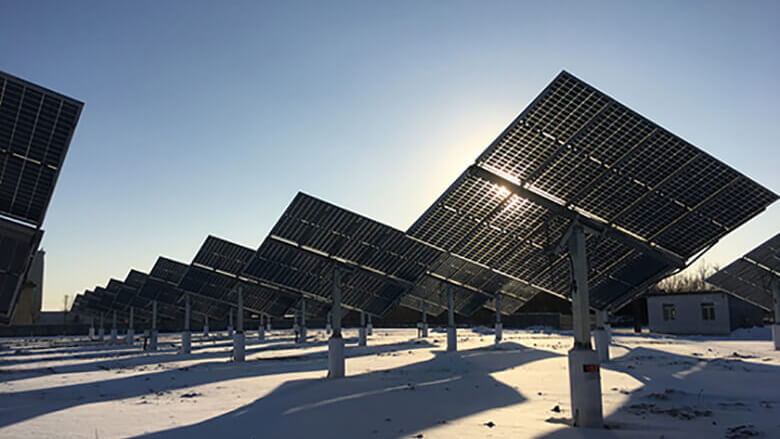
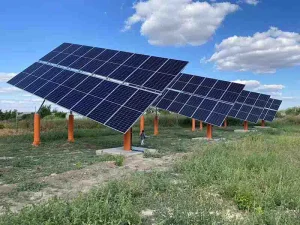
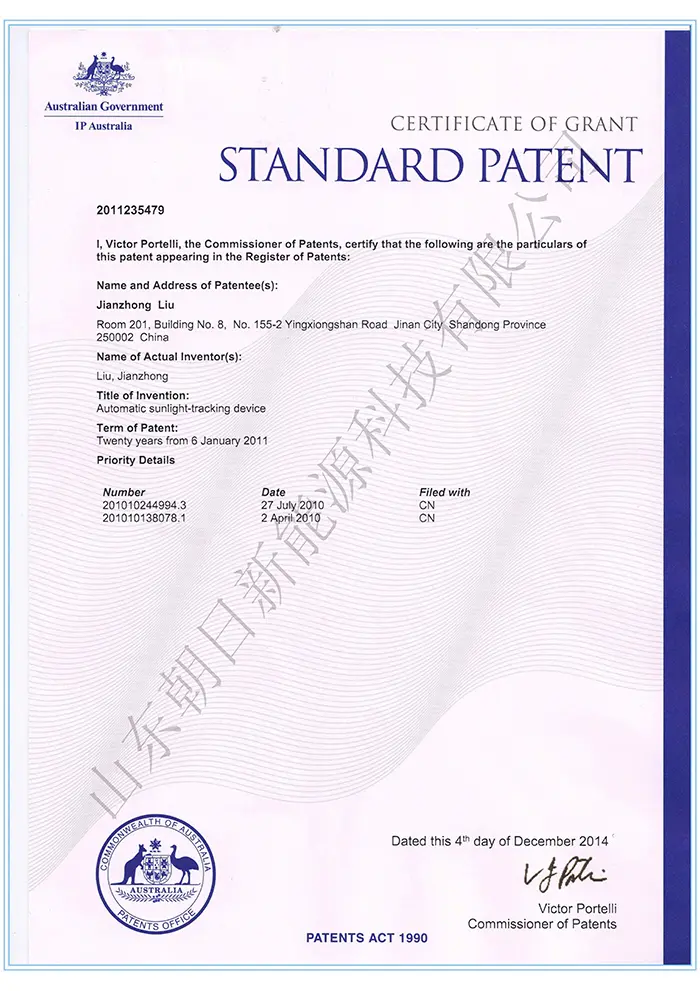
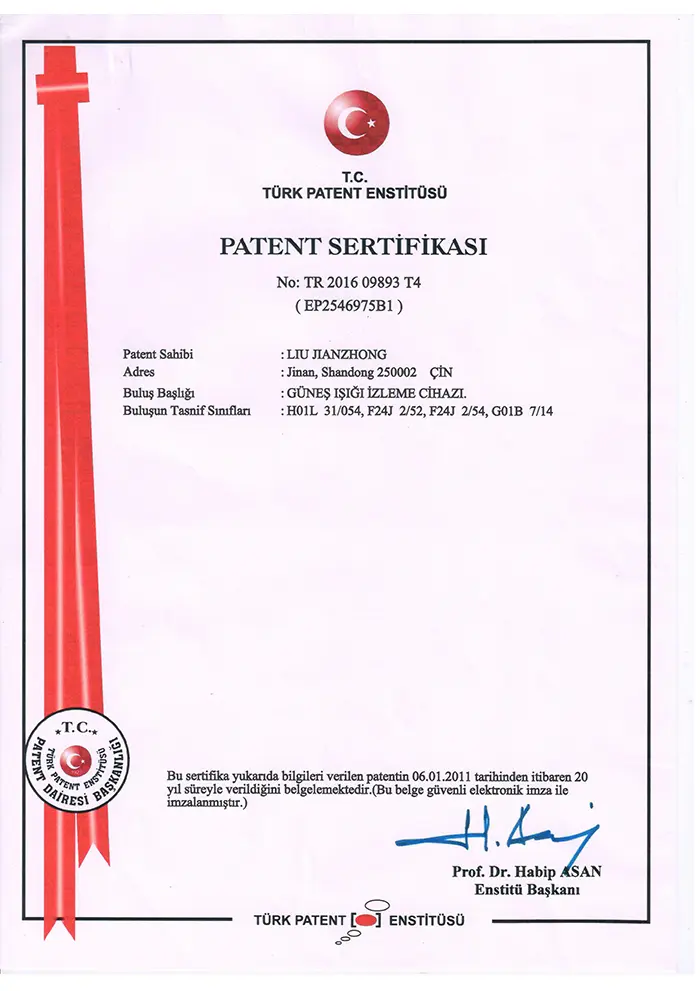
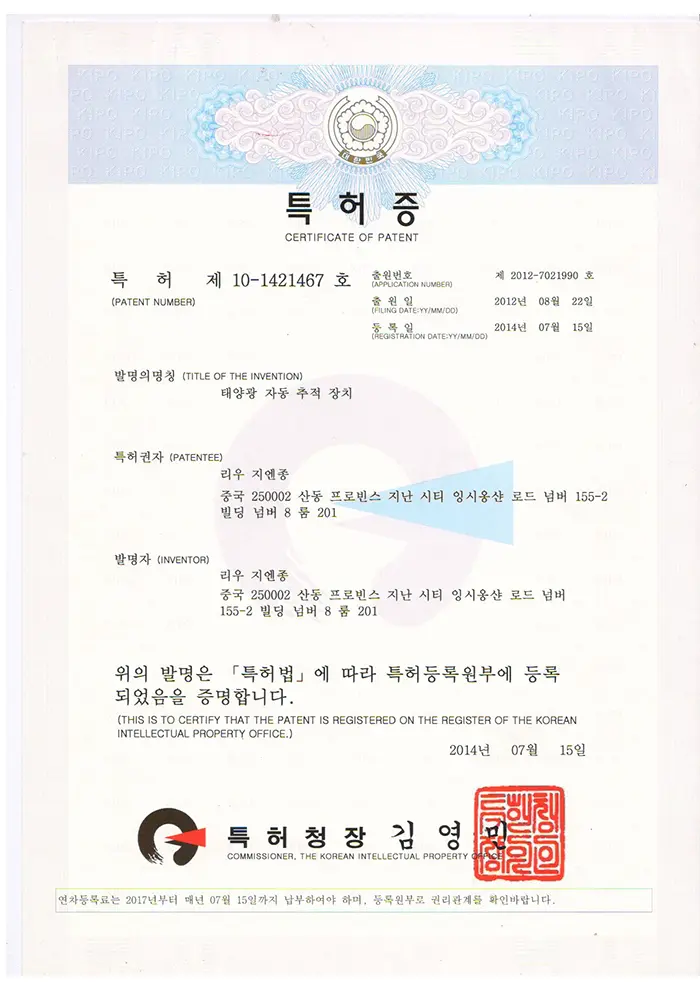
Our products include stationary brackets, adjustable PV brackets, flat single-axis tracking systems, tilted single-axis tracking systems, and dual-axis tracking systems. We hold patents from the European Patent Office, USA, Canada, Australia, Japan, and more. Our principle is simple: More Simple, More Reliable, More Effective.
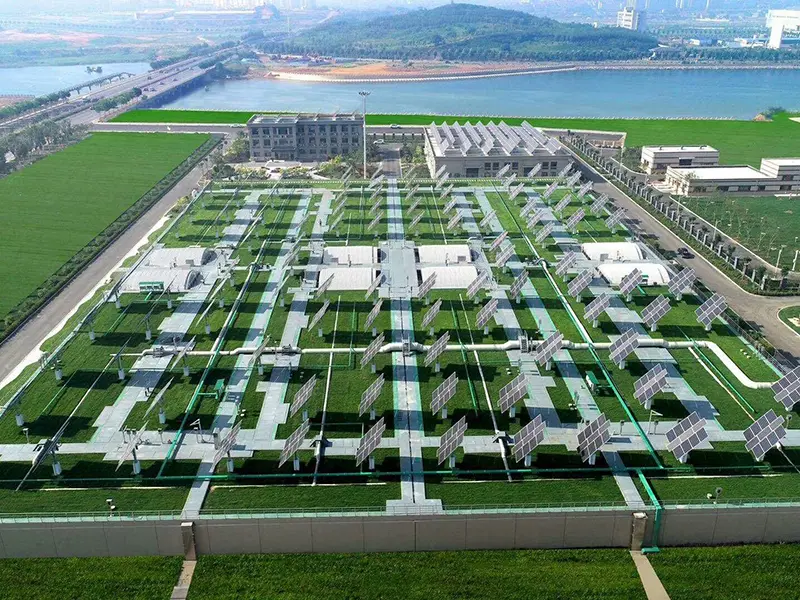
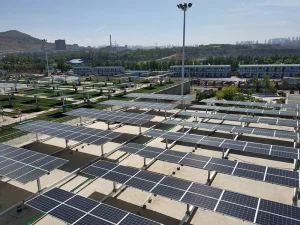
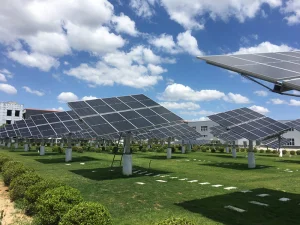
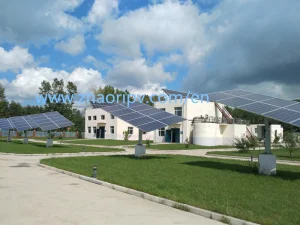
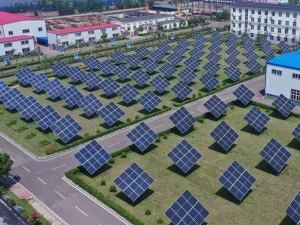
Factory Project: Distributed industrial roof and ground solutions for energy self-sufficiency.
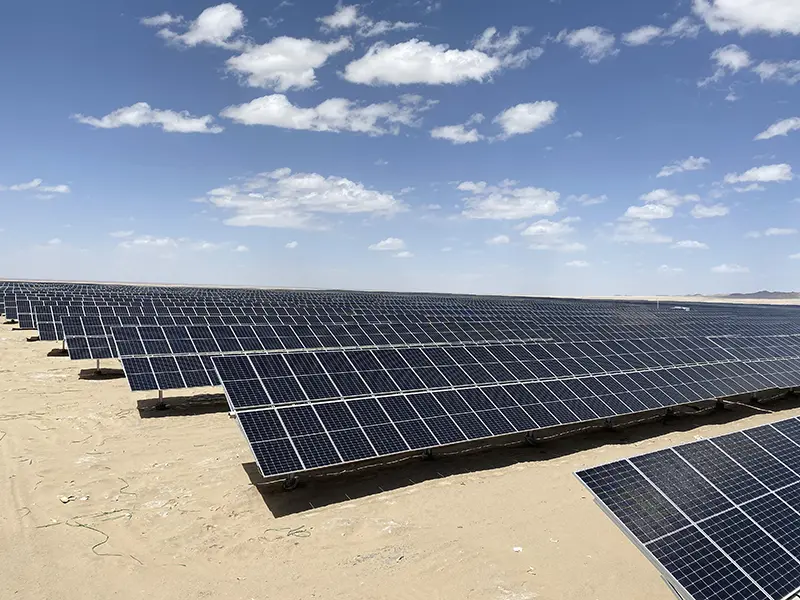
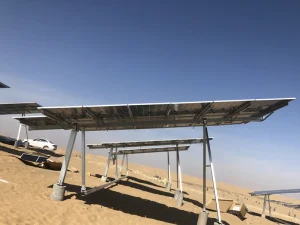
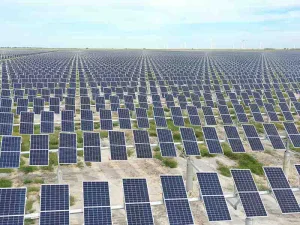
20MW Desert Utility: High-temperature and sandstorm-resistant tracking technology in extreme environments.
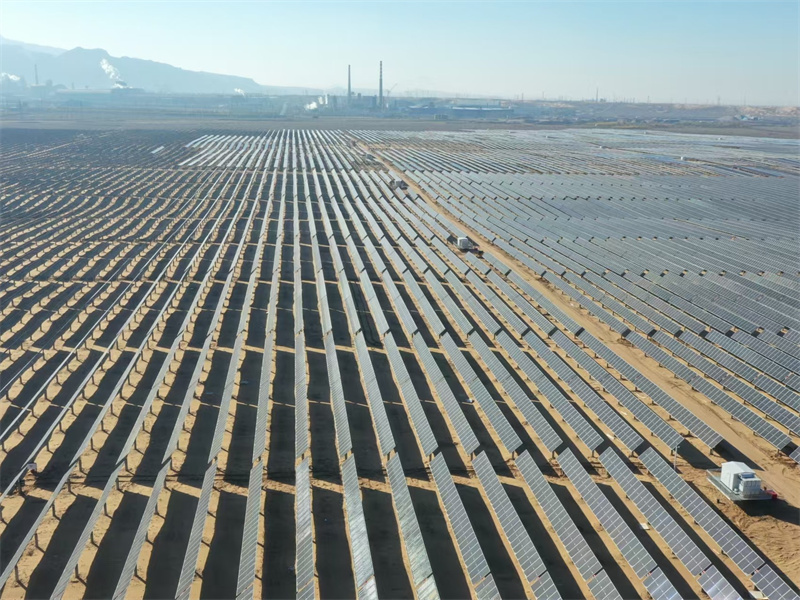
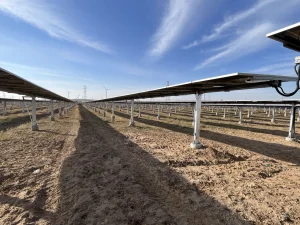
360MW Utility Scale: Massive deployment of single-axis trackers with centralized control systems.
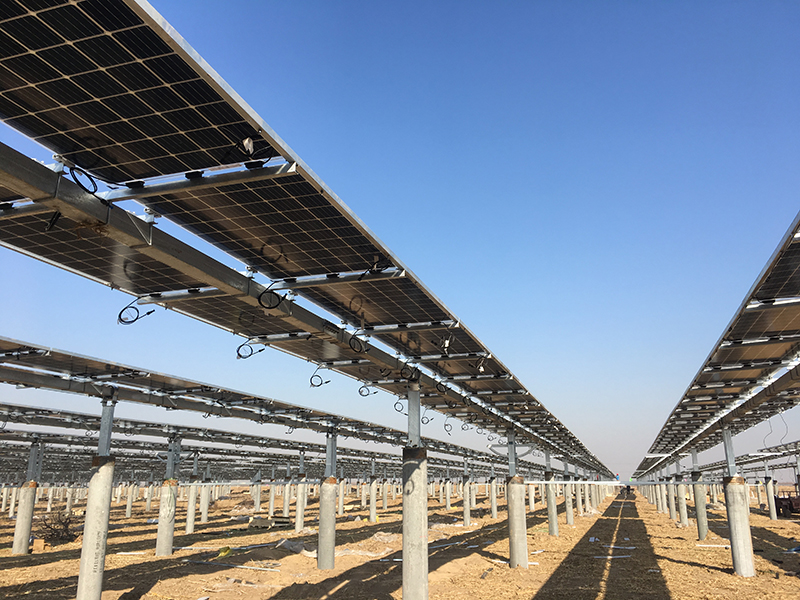
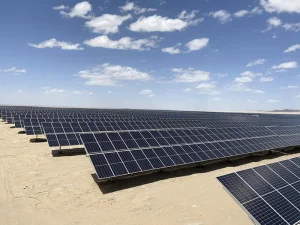
110MW Bifacial Project: Optimized GCR and height to maximize rear-side albedo capture.
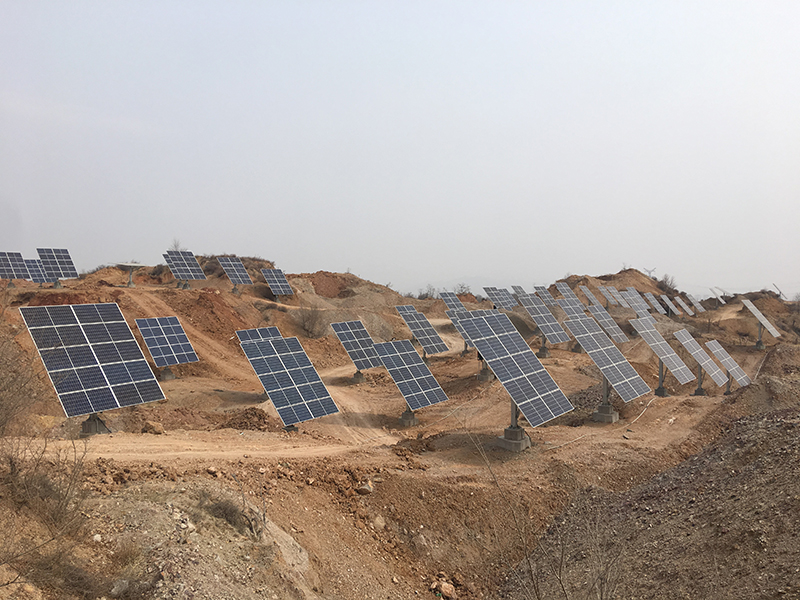
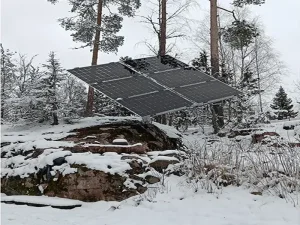
Mountain Project: Adapting to complex topography with modular single-axis designs.
Navigating the legal and technical landscape of international solar markets requires more than just high-quality steel. Shandong Zhaori ensures that every exported tracker meets localized Grid Codes, Structural Codes, and Safety Standards.
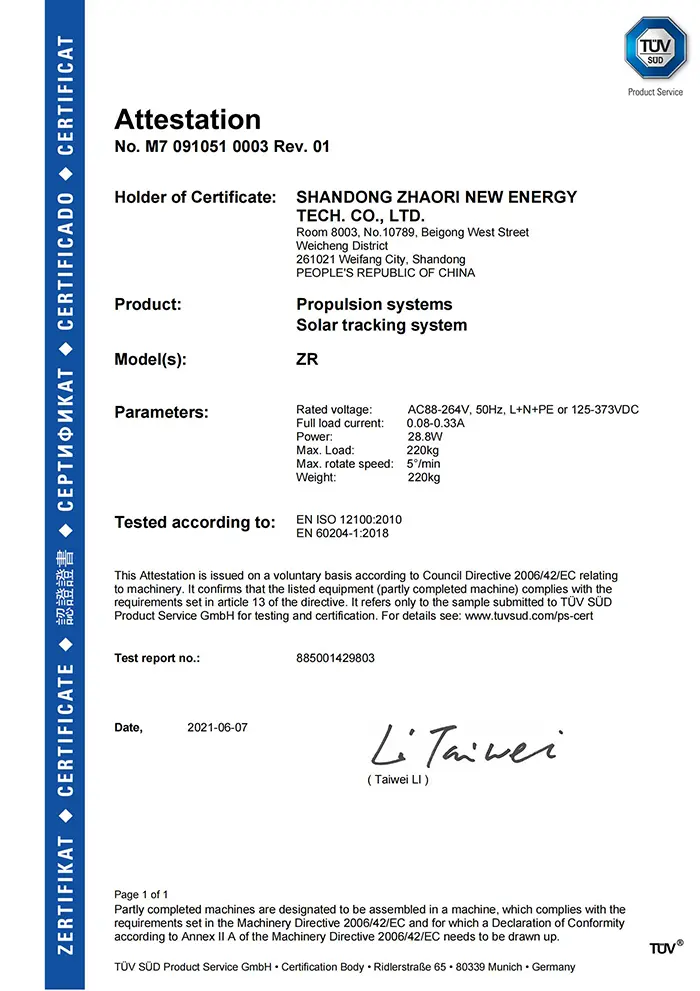
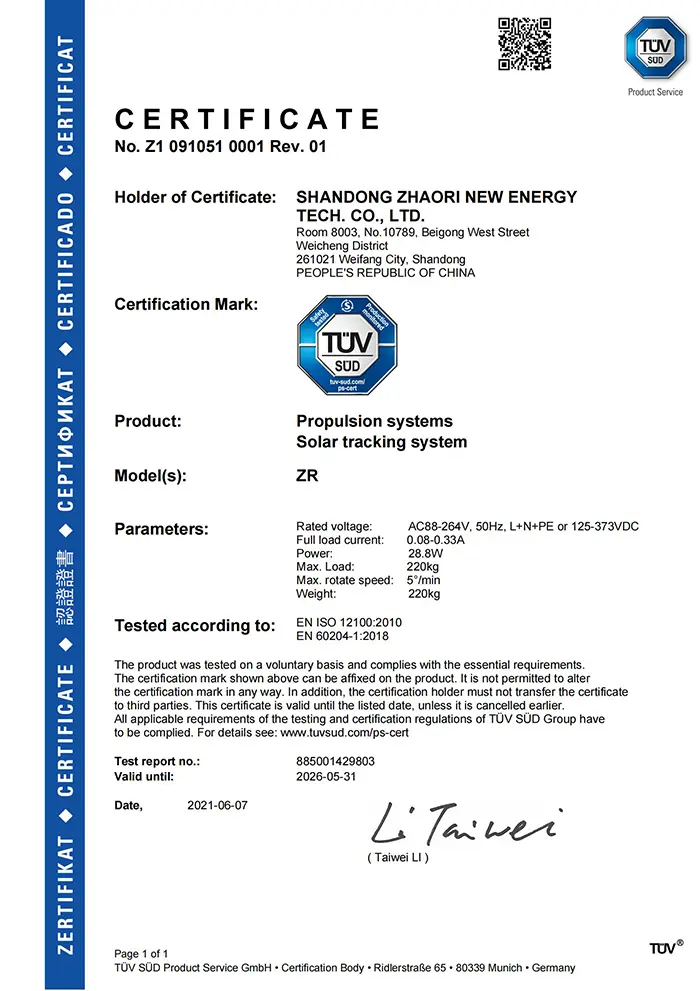
Our systems are fully certified by TUV, CE, and ISO. We also hold local certifications in key markets like Brazil (INMETRO), India (MNRE compliance), and the USA (UL 2703/3703).
We provide 24/7 technical support and on-site commissioning assistance. Our engineers are experienced in the specific soil conditions of North China, the deserts of the MENA region, and the snowy plains of North America.
With a dedicated foreign trade department, we handle complex Incoterms, container optimization, and port logistics, ensuring that components arrive damage-free and ready for rapid installation.
 Zhaori