China Top Solar Panel Tracking System Manufacturers

Time:2026-09-11 Author:Henry
0%

China has become a major manufacturing center for the Solar Panel Tracking System industry. Its suppliers serve utility-scale projects across Asia, Europe, the Middle East, Africa, and the Americas. This growth reflects more than lower production costs. It also includes stronger engineering, automated factories, weather testing, and wider project experience.

A Solar Panel Tracking System can move photovoltaic modules toward the sun during the day. This movement may increase energy yield, especially on large, open sites. Yet performance depends on terrain, wind conditions, maintenance access, and software accuracy. A tracker that works well in a dry desert may not suit a coastal project with salt exposure. Small details matter.

Dan Shugar, founder of Nextracker and a widely recognized solar-tracking specialist, has said, “Trackers are the most important innovation in solar energy since the photovoltaic cell.” His view highlights the technology’s commercial importance, but it should not end the discussion. Higher output does not automatically mean better value. Buyers must examine structural design, drive systems, control algorithms, spare parts, warranties, and long-term service support.

This guide reviews China’s leading manufacturers through those practical criteria. It considers product reliability, certification, delivery capability, project references, and after-sales responsiveness. Factory scale can impress. Field performance matters more. Some published claims may also need independent verification, because marketing language is not the same as operating evidence. The strongest suppliers combine measurable performance with transparent technical documentation and realistic limitations.
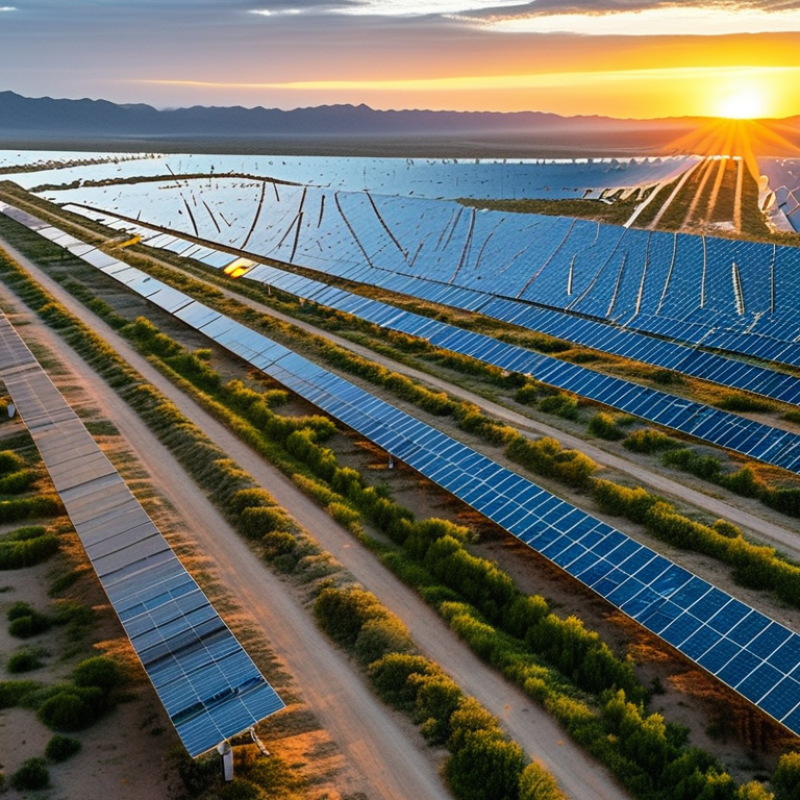
China Top Solar Panel Tracking System Manufacturers

What Is a Solar Panel Tracking System?

China’s solar panel tracking system manufacturers produce equipment that changes a panel’s angle during the day. The structure follows the sun’s apparent movement across the sky. This can increase direct sunlight exposure compared with fixed mounting. A controller sends movement instructions to motors, while sensors or calculated solar positions guide the rotation. The main types are single-axis and dual-axis trackers. Single-axis systems usually rotate from east to west. Dual-axis systems also adjust elevation.

In practical site assessments, engineers check wind speed, soil strength, terrain, and maintenance access. These details matter. A tracker needs stable foundations and accurate alignment. Its steel frame must support panels during strong weather. Motors, gearboxes, cables, and control units require regular inspection. Dust, rain, and temperature changes can affect performance. Remote monitoring can identify stalled rows or unusual power output before losses become serious.

Tracking systems are not suitable for every project. They need more land, moving parts, and maintenance than fixed structures. Uneven terrain may increase installation difficulty. Shading between rows also requires careful spacing. The design is not perfect. Some projects may gain less energy than expected because of cloudy weather or poor calibration. Buyers should compare measured energy gains, component quality, service response, and warranty terms. A reliable manufacturer should provide testing records, installation guidance, and clear maintenance procedures.

How China’s Solar Tracking Industry Is Organized

China’s solar tracking industry is organized as a layered manufacturing network, not a single centralized market. Steel fabricators, bearing suppliers, control-system developers, and electrical contractors often operate in different provinces. Tracker manufacturers then combine these parts with software, structural design, and field-service teams. This structure reduces production costs, but it can complicate responsibility when a motor, sensor, or foundation performs poorly.

The scale is substantial. The IEA PVPS Trends 2024 report states that China installed about 216.9 GW of new photovoltaic capacity in 2023. That enormous domestic market gives tracking suppliers practical testing grounds, especially in utility-scale deserts and high-irradiance regions. NREL research indicates that single-axis tracking can increase annual energy yield compared with fixed-tilt systems, although the gain depends on land shape, weather, terrain, and maintenance quality. More energy is not automatic.

Project developers usually select suppliers through technical tenders. They examine wind loading, pile design, corrosion protection, communication protocols, and availability guarantees. Regional engineering companies may handle installation, while specialized control teams monitor row alignment and stow commands remotely. The supply chain remains export-oriented, too. Chinese manufacturers increasingly adapt designs for different grid codes, climates, and construction standards.

A weak point remains visible. Industry reports often emphasize shipment volume, while field reliability data stays fragmented. A tracker can look efficient in a spreadsheet and still lose output through poor calibration, dust, or delayed repairs. Better public operating data would make comparisons more trustworthy. Industry growth needs evidence, not only capacity figures.

China Top Solar Panel Tracking System Manufacturers - How China’s Solar Tracking Industry Is Organized

Industry Dimension How the Chinese Industry Is Organized Typical Data or Market Practice Reference Basis
Primary product categories Manufacturers mainly supply horizontal single-axis trackers, fixed-tilt structures, and selected dual-axis systems. Utility-scale ground-mounted projects account for the main application of tracking systems. Horizontal single-axis tracking is generally preferred for large, relatively flat solar parks because it combines energy gain with simpler mechanical design than dual-axis tracking. NREL and IEA PVPS technology assessments
Value-chain structure The supply chain is divided among steel and torque-tube producers, drive and actuator suppliers, controllers and sensors, engineering companies, project integrators, and operation-and-maintenance providers. A tracking-system supplier may manufacture core mechanical parts in-house while outsourcing motors, gearboxes, electronics, bearings, fasteners, or galvanized steel components. Common equipment-manufacturing and EPC procurement model in China
Manufacturing concentration Production is connected to China’s broader photovoltaic, steel-processing, electrical-equipment, and automation clusters rather than being limited to one dedicated tracker-only region. The strongest industrial advantages are high-volume metal fabrication, galvanized steel processing, industrial motor production, electronics assembly, and export logistics. China photovoltaic and manufacturing-industry structure reported by CPIA and national industry statistics
Customer segments Customers typically include state-owned energy groups, independent power producers, engineering-procurement-construction contractors, module suppliers, distributors, and overseas solar developers. Large projects are usually purchased through technical tenders or EPC packages, with evaluation based on delivered cost, energy yield, reliability, warranty, and local service capability. Utility-scale solar procurement practice
Key technical specifications Product selection commonly considers row configuration, module compatibility, wind and snow loading, terrain adaptability, corrosion protection, backtracking, terrain-following capability, and control architecture. Typical designs support large-format crystalline-silicon modules and bifacial modules, subject to project-specific structural, electrical, and loading calculations. IEC photovoltaic-system standards and project engineering specifications
Control and communications Modern systems generally combine astronomical positioning, distributed controllers, motor drives, weather inputs, remote monitoring, and automatic safe-position strategies. Common functions include backtracking, wind-stow protection, fault alarms, remote parameter updates, and integration with the solar plant’s supervisory control system. Standard utility-scale tracker control architecture
Project geography Domestic demand is strongest in large ground-mounted projects, including desert, high-plateau, and other utility-scale development zones. Export demand is served through EPC contractors and overseas project developers. Designs must be adapted to local conditions such as high wind, snow, dust, uneven terrain, extreme temperature, saline exposure, and limited maintenance access. China utility-scale renewable-energy development patterns and international project requirements
Quality and compliance Qualified suppliers typically maintain quality-management systems, material traceability, structural calculations, factory testing, installation procedures, and project-level inspection records. Important verification items include steel coating quality, fatigue performance, actuator durability, electrical protection, grounding, communication reliability, and documentation for local certification. IEC requirements, ISO quality practices, and project owner specifications
Commercial evaluation Buyers evaluate the complete lifecycle rather than only the initial equipment price, comparing energy yield, installation labor, civil works, spare parts, service coverage, and expected availability. A lower purchase price may not result in a lower levelized cost of electricity if the design causes higher installation complexity, downtime, or maintenance requirements. Utility-scale solar financial and engineering evaluation practice
After-sales service Service is organized through factory engineering teams, regional representatives, EPC contractors, local installation partners, and long-term operation-and-maintenance teams. Service packages commonly cover commissioning, operator training, troubleshooting, spare-parts planning, software support, and warranty response procedures. Typical tracker procurement and O&M contracts

Note: The table describes the organization, products, procurement methods, and technical practices of China’s solar tracking-system industry without ranking or identifying individual companies or brands.

Leading Solar Panel Tracking System Manufacturers in China

Leading Solar Panel Tracking System Manufacturers in China

China’s tracker manufacturers are gaining attention as utility-scale solar projects expand rapidly. IRENA reported that global solar capacity reached about 1,419 GW by the end of 2023. China contributed more than half of the year’s new capacity. This growth increases demand for reliable single-axis tracking systems, especially across large desert and agricultural sites.

NREL research commonly places single-axis tracker gains near 15% to 25% above fixed-tilt systems, depending on location, row spacing, and weather. Leading solar panel tracking system manufacturers in China therefore focus on torque-tube strength, wind stow logic, corrosion protection, and motor reliability. Buyers should request independent test records, structural calculations, and compliance evidence related to IEC 62817. Field experience matters. Dust, uneven ground, and extreme temperature can expose weaknesses that laboratory tests miss.

The strongest suppliers also provide monitoring software, spare-parts planning, and local commissioning support. IEA PVPS data shows that utility-scale photovoltaic projects increasingly require lower operating costs over long lifetimes. That makes gearbox maintenance and actuator replacement rates important commercial indicators. No ranking is perfect. A low purchase price may hide installation delays or weak service coverage. Manufacturers should publish realistic energy-yield assumptions, not only attractive laboratory figures. Even experienced project teams can underestimate dust accumulation and terrain variation. Careful site data still beats a polished brochure.

Key Technologies Used in Chinese Tracking Systems

China Top Solar Panel Tracking System Manufacturers

Chinese solar tracking manufacturers increasingly focus on control precision, structural durability, and lower field maintenance. Most utility projects use single-axis trackers that follow the sun from east to west. Their controllers combine astronomical algorithms, geographic coordinates, and real-time clock data. Some systems also use GPS or RTK positioning for improved alignment during installation.

The mechanical core usually includes a torque tube, slew drive, bearings, and galvanized or coated steel supports. These parts must withstand strong wind, dust, temperature changes, and repeated daily movement. Wind sensors can trigger a protective stow position when gusts rise. In some designs, distributed controllers manage small tracker groups instead of relying on one central unit. This reduces communication delays and helps technicians locate faults faster. Useful details matter. A loose bolt, damaged cable, or poorly leveled post can reduce output across several rows.

Modern systems connect with SCADA platforms for remote monitoring, fault alerts, and performance analysis. Software can compare tracker angles with irradiance data and detect abnormal motion. Bifacial module projects may use rear-side light models to adjust rotation more carefully. However, field conditions remain difficult. Uneven terrain, seasonal shading, and unexpected wind can weaken theoretical gains. No algorithm removes uncertainty. Experienced engineers still review weather records, soil reports, and maintenance access before approving a design. Some early assumptions may prove wrong after the first operating season, so measured data should guide later adjustments.

How to Evaluate a Chinese Tracking System Manufacturer

China Top Solar Panel Tracking System Manufacturers

How to Evaluate a Chinese Tracking System Manufacturer

Evaluating a Chinese tracking system manufacturer requires more than comparing prices. Ask for factory audit records, production capacity, and quality-control procedures. Check whether steel, motors, controllers, and fasteners have traceable inspection documents. A serious supplier should explain its testing process clearly. Request reports for wind loading, corrosion resistance, electrical safety, and controller reliability. Independent laboratory evidence is more useful than attractive brochures.

Study completed projects in climates similar to your site. Request operating data, maintenance logs, and contact details for project owners. Look closely at tracker movement during high winds, uneven terrain, and extreme temperatures. Ask how the manufacturer manages software updates and replacement parts. Response time matters. A low purchase price becomes expensive when one failed actuator delays an entire row.

Visit the factory if possible. Watch how workers calibrate motors and inspect welds. Review incoming-material controls and final assembly records. The warranty should define response times, exclusions, spare-parts availability, and local technical support. Do not accept vague promises. I would record every uncertainty, even small ones, because a polished presentation can hide weak field experience. My own evaluation would not be perfect; production conditions change, and sample testing cannot represent every shipment. That weakness deserves regular review.

How to Evaluate a Chinese Solar Tracking System Manufacturer

The chart presents a practical 100-point procurement framework for comparing solar tracking system manufacturers. The highest priorities are long-term bankability, structural reliability, energy-yield performance, and lifecycle service capability. Buyers should verify each category through audited project references, wind-load calculations, test reports, warranty terms, delivery records, and local O&M resources.

FAQS

: What is a solar panel tracking system?

: It changes panel angles during the day. The structure follows the sun’s apparent movement. This can increase direct sunlight exposure.

What are the main tracker types?

Single-axis trackers usually rotate from east to west. Dual-axis trackers also adjust elevation. Single-axis designs are more common in large projects.

How does a tracking system control movement?

Controllers use solar-position calculations, geographic coordinates, and time data. Sensors may support alignment. Motors and gearboxes then rotate the structure.

What site conditions should engineers inspect?

They should check wind speed, soil strength, terrain, shading, and maintenance access. Stable foundations are essential. Uneven ground can complicate installation.

What parts require regular maintenance?

Technicians inspect motors, gearboxes, bearings, cables, bolts, and controllers. Dust and rain can affect operation. One loose bolt may reduce output across several rows.

Can remote monitoring improve system performance?

Yes, remote platforms can detect stalled rows and unusual power output. They can also compare tracker angles with sunlight data. Alerts help technicians find faults earlier.

Does tracking always produce more energy?

No. Cloudy weather, poor calibration, shading, and difficult terrain can reduce the gain. The forecast may be wrong. Measured operating data deserves more trust.

How should buyers evaluate a manufacturer?

Request factory audit records, testing reports, production details, and traceable material documents. Review projects in similar climates. Ask about spare parts, software updates, warranty limits, and response times.

Should buyers visit the factory?

If possible, yes. Observe weld inspections, motor calibration, and final assembly. A polished presentation is not proof. My evaluation could still miss problems, so regular review remains necessary.

Conclusion

A Solar Panel Tracking System is a mechanical and control solution that adjusts the position of photovoltaic panels to follow the sun, helping improve energy collection compared with fixed mounting structures. This article explains how China’s solar tracking industry is organized, from component suppliers and engineering companies to system integrators and project service providers. It also outlines the main types of tracking solutions, their operating principles, and the factors that influence performance, reliability, and installation requirements.

The discussion introduces the capabilities commonly found among leading Chinese manufacturers without focusing on individual brand names. Key technologies include automated control systems, weather and position sensors, drive mechanisms, structural design, remote monitoring, and safety protection. Buyers can evaluate a manufacturer by reviewing product quality, testing procedures, customization ability, project experience, technical support, supply capacity, warranty terms, and long-term operating performance. Together, these considerations help developers select a dependable tracking solution for different solar projects and site conditions.


Henry

Henry

Henry is a dedicated marketing professional with a profound expertise in the company's offerings. With years of experience in the industry, he possesses an impressive understanding of the market dynamics and consumer behaviors that drive success. Henry is committed to sharing his insights through......