The 2026 Top 1 Axis Tracking Solar Panels for Global Buyers guide examines a technology built to follow the sun from east to west. A 1 Axis Tracking Solar Panel can increase daily energy capture, especially across large, open sites with strong direct sunlight. Its steel rows turn gradually, like slow-moving sunflower stems, while sensors and controllers adjust the array’s position.
Dan Shugar, founder of Nextracker and a long-time solar tracking specialist, has described the opportunity clearly: “The sun is the world’s largest power plant.” His observation fits the central promise of solar tracking. More sunlight can reach the modules during valuable morning and afternoon hours. However, tracking is not automatically the best choice for every project.
Terrain, wind, soil conditions, maintenance access, and grid design can change the result. A low-cost tracker may disappoint if motors fail or spare parts arrive late. A stronger system may cost more but perform better over twenty years. Buyers should examine yield simulations, warranty terms, corrosion protection, and local service capacity.
This guide compares practical options for utility developers, EPC contractors, distributors, and commercial buyers. It considers performance, reliability, installation complexity, and regional suitability. The rankings are useful, but not absolute. Climate data can be incomplete. Supplier claims also require careful checking.
Real projects are rarely perfect. Dust accumulates. Communication systems sometimes fail. Operators must plan for those details before signing an order. A thoughtful buying decision connects engineering evidence with field experience, not advertising alone.
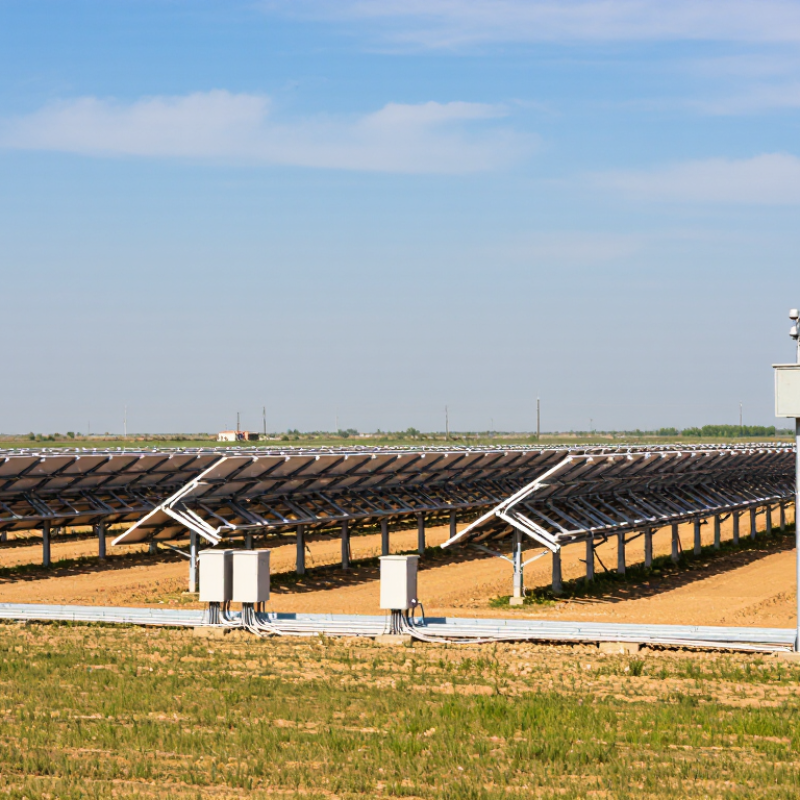
For global buyers, one-axis tracking can deliver 15–25% more annual energy than fixed-tilt PV, according to NREL comparative analyses. The gain comes from following the sun from east to west. More direct sunlight reaches the modules during morning and afternoon hours. That extra production can improve land productivity and project revenue.
NREL’s 2024 Annual Technology Baseline shows single-axis tracking as a leading utility-scale configuration in energy-yield modeling. IEA PVPS Trends 2024 also identifies tracking as an important design option for large solar plants. However, the result is not universal. Local latitude, terrain, wind limits, row spacing, and backtracking settings can reduce the advantage. A flat, open site may approach the upper range. A complex site may deliver much less.
Field experience requires caution. Trackers add motors, bearings, control systems, and maintenance tasks. Dust can also affect sensor accuracy and module output. The 15–25% figure is useful, but it is not a promise. Buyers should compare measured irradiation, hourly generation, availability assumptions, and operating costs before selecting equipment. A lower-cost fixed system may still perform better in difficult terrain. That is easy to overlook.
2026 Top 1 Axis Tracking Solar Panels for Global Buyers
Horizontal-axis tracking is becoming a practical choice for large solar fields. Rows rotate from east to west during daylight hours. Most designs use a north-south horizontal axis. Rotation commonly reaches 60°–90°, depending on terrain, wind limits, and actuator design. That range is not universal. Buyers should verify the actual stow angle, not trust a catalog headline.
Backtracking changes the operating logic. When the sun sits low, rows rotate slightly away from the sun. This reduces morning and evening shadows between rows. The energy trade-off can be worthwhile. IRENA’s Renewable Capacity Statistics 2025 recorded 452 GW of new solar capacity worldwide in 2024. At this scale, small shading losses become financially visible. A field with uneven ground may still need custom backtracking software. A neat simulation is not a field result.
The International Energy Agency’s PVPS Trends 2024 reported global photovoltaic capacity above 1.6 TW by the end of 2023. Buyers should inspect wind-stow behavior, row spacing, slope tolerance, and sensor redundancy. Dust can also weaken tracking accuracy. Field technicians should compare actual rotation angles with control-system records after commissioning. A 90° mechanism may sound superior, but excessive movement can increase wear, maintenance visits, and parasitic consumption. The better design is often the less dramatic one.
How to read the chart: The values show the total east–west mechanical rotation envelope of representative horizontal single-axis tracker configurations. A ±30° range equals 60° total travel, while ±45° equals 90° total travel.
Backtracking: During low sun angles, the tracker can intentionally rotate away from the sun to reduce row-to-row shading. The required backtracking angle depends on latitude, row spacing, terrain, season, and the selected ground-coverage ratio, so it is not a fixed universal value.
For global buyers, a top-performing single-axis tracker must prove more than energy gain. IEC 62817 testing examines tracker design, mechanical loads, controls, and durability. Buyers should request complete test reports, not only a compliance statement. In the field, rows face dust, strong wind, uneven terrain, and repeated thermal expansion. These conditions expose weak bearings and poorly protected actuators.
A 25-year design life is a useful benchmark, but it is not an effortless promise. Ask for corrosion protection data, replacement procedures, spare-part availability, and maintenance intervals. A practical inspection may include loose fasteners, cable wear, gearbox noise, and inaccurate position sensors. Small faults can reduce output across thousands of modules. Field teams also need clear wind-stow logic and reliable communication with the plant controller.
The 99% availability target deserves careful definition. Does it include planned maintenance, grid outages, extreme weather, or communications failure? Contract language should state the measurement period, excluded events, and repair response time. Real performance depends on site preparation and operator training, not hardware alone. Some product claims still rely on limited operating histories. That deserves scrutiny. Independent acceptance testing, monthly SCADA records, and transparent warranty terms provide stronger evidence. A high-quality tracker may deliver excellent results, yet imperfect terrain surveys or delayed maintenance can undermine the original forecast.
Generic industry benchmark for utility-scale horizontal single-axis photovoltaic tracking systems
| Benchmark Dimension | 2026 Reference Benchmark | Typical Engineering Range | Buyer Verification Point |
|---|---|---|---|
| Tracker Architecture | Horizontal single-axis tracker with independent row control | North-south axis; east-west daily tracking | Confirm site-specific layout, terrain tolerance, and row-control strategy |
| Design Qualification | Designed and tested with reference to IEC 62817 | Mechanical, electrical, environmental, and control-system qualification | Request the applicable test reports and configuration scope; IEC 62817 is not a performance guarantee |
| Operational Life | Minimum 25-year design service life | 25–30 years, subject to maintenance and environmental conditions | Check corrosion category, fatigue calculations, coating system, and spare-parts plan |
| Target Availability | Up to 99% annual mechanical and control-system availability target | 98%–99% depending on site conditions, maintenance response, and exclusions | Define availability formula, planned outages, force majeure, and service-level response times |
| Tracking Angle | Approximately ±45° or greater tracking envelope | About ±45° to ±60°, depending on geometry and wind strategy | Validate annual energy yield using the project’s latitude, horizon, and shading conditions |
| Tracking Accuracy | ≤0.5° normal operating error under stable conditions | Approximately 0.1°–0.5° control accuracy | Review sensor calibration, controller sampling, communication loss behavior, and commissioning records |
| Backtracking | Astronomical or sensor-assisted backtracking included | Row-by-row or zone-based shading mitigation | Require a terrain-aware backtracking model for uneven sites |
| Ground Coverage Ratio | Optimized for the project’s energy-density and shading balance | Approximately 0.30–0.45 for many utility-scale layouts | Confirm pitch, module dimensions, row length, topography, and bifacial albedo assumptions |
| Wind Design | Site-specific wind-load design with automatic wind-stow mode | Project-dependent; commonly engineered for local basic wind speeds above 40 m/s | Use the governing local code, terrain category, topography, gust factor, and module load limits |
| Wind-Stow Function | Automatic protective stow based on wind sensors and forecast inputs where available | Programmable threshold with emergency fallback logic | Verify redundant sensing, communications failure response, and stow-time requirements |
| Operating Temperature | Suitable for the project’s certified ambient-temperature envelope | Approximately −30°C to +55°C for many utility-scale applications | Check motor, gearbox, controller, battery, lubricant, and cable temperature ratings |
| Corrosion Protection | Protection selected for the site’s atmospheric corrosivity category | Hot-dip galvanized or equivalent protected steel; enhanced systems for coastal sites | Request coating thickness, salt-spray evidence, galvanic-isolation details, and inspection procedures |
| Drive System | Low-maintenance electromechanical drive with overload protection | Distributed or centralized drive architecture | Evaluate gearbox duty cycle, lubrication interval, torque margin, and field-replaceable parts |
| Module Compatibility | Compatible with the selected framed or approved frameless PV module configuration | Commonly supports large-format modules subject to structural validation | Confirm module dimensions, clamp zones, mass, torsional limits, and warranty requirements |
| SCADA and Communications | Remote monitoring with row-level alarms and manual override | Industrial wired or wireless communication network | Check protocol compatibility, cybersecurity controls, data retention, and offline operation |
| Energy Yield Assessment | Independent P50/P90 simulation using bankable meteorological and loss assumptions | Yield advantage varies by latitude, climate, albedo, horizon, and layout | Require a transparent comparison against fixed-tilt and alternative tracking layouts |
| O&M Readiness | Documented preventive-maintenance program and regional spare-parts strategy | Routine inspections, torque checks, lubrication, firmware updates, and sensor calibration | Confirm training, local technicians, response time, inventory levels, and end-of-life procedures |
One-axis tracking solar panels need a site-specific design, not a universal ranking. In field assessments, wind exposure often decides the tracker structure, row spacing, and safe stow position. Coastal gusts, open plains, and mountain passes can create different loads within the same region. A reliable evaluation should combine local wind records with geotechnical tests and seasonal weather data.
Snow requires equal attention. Heavy, wet snow can increase structural pressure and delay energy production. Steeper tracker angles may support shedding, but nearby rows can still collect drifting snow. Soil drainage matters after thawing. Muddy access roads can stop maintenance vehicles when electricity demand is high.
Terrain changes the financial picture. Slopes may require shorter rows, terracing, or more complex foundations. Uneven ground can also increase shading between modules. That reduces the expected bifacial advantage. With bright soil, pale gravel, and suitable row spacing, rear-side gain may reach 5–15%. Dark soil, grass, and dust can produce much less.
Small details matter.
A practical design review should test wind, snow, slope, albedo, and maintenance access together. Our early layouts have sometimes looked efficient on paper but failed during drainage checks. That is a useful warning. Energy estimates should include losses from snow cover, tracker downtime, terrain mismatch, and cleaning limits. Local engineers should verify each assumption before procurement.
For global buyers, one-axis tracking should be judged by delivered electricity, not panel price alone.
Field assessments often show higher annual energy output than fixed-tilt systems, especially in regions with strong direct sunlight. However, the gain depends on weather, row spacing, terrain, and grid access. A project with a 10% yield increase may still have a weaker LCOE if financing or civil works become expensive.
Land use needs careful modeling. Trackers require wider row spacing to reduce shading and allow movement. This can increase the site area, roads, and cable lengths. On irregular land, the extra grading may erase part of the energy benefit.
Small details matter. Dust, wind, snow, and weak drainage can raise O&M costs. Operators should review spare-part access, actuator reliability, cleaning schedules, and technician response time. A low-cost design is not always a low-cost asset.
Module degradation also changes long-term economics. Use tested degradation assumptions rather than optimistic sales estimates. A modest annual loss compounds over twenty-five years and affects both revenue and LCOE.
I would compare independent test data, warranty terms, and real operating records. Yet records can be incomplete. That is an uncomfortable limitation. Buyers should run sensitivity cases for lower yield, higher maintenance, delayed repairs, and faster degradation before approving the final design.
It rotates panel rows from east to west during daylight. Most systems use a north-south horizontal axis. Rotation commonly reaches 60°–90°, but terrain and wind limits matter.
Not always. Greater movement can increase wear, maintenance visits, and electricity consumption. Buyers should verify the actual stow angle, not trust a headline.
Backtracking turns rows slightly away from the sun during low morning and evening angles. This creates wider shadow gaps. Energy production may decrease briefly, but daily shading losses can fall.
Wind exposure, snow, slope, drainage, soil strength, and maintenance access all matter. Coastal gusts and mountain passes can create very different structural loads. Local testing is essential.
Yes. Slopes may require shorter rows, terracing, or complex foundations. Uneven ground can increase module shading. A clean simulation may not represent the finished field.
Rear-side gains may reach 5%–15% with bright soil, pale gravel, and suitable row spacing. Dark soil, grass, dust, and shading can reduce the gain sharply.
Compare delivered electricity, LCOE, land use, civil works, cable lengths, and grid access. A 10% yield increase may not offset expensive grading or financing.
Review actuator reliability, spare-part access, cleaning schedules, sensor redundancy, and technician response times. Dust can weaken tracking accuracy. Small failures can become expensive.
Use independent test data, warranty terms, and operating records. Model lower yields, delayed repairs, higher maintenance, and faster degradation. Records may be incomplete. That limitation matters.
In 2026, the 1 Axis Tracking Solar Panel is positioned as a practical solution for global solar projects seeking higher energy yield than fixed-tilt PV systems. One-axis trackers typically use a horizontal rotation axis, automated backtracking, and an operating range of approximately 60°–90° to follow the sun while reducing row-to-row shading. Under suitable conditions, this design may deliver 15–25% more electricity than fixed systems, while bifacial modules can provide an additional 5–15% gain.
For reliable project planning, buyers should evaluate IEC 62817 compliance, a 25-year service life, and target availability near 99%. Site selection must consider wind exposure, snow load, terrain slope, soil conditions, and maintenance access. A complete economic comparison should include LCOE, land requirements, installation complexity, operating and maintenance costs, and module degradation. The best solution balances energy gains with structural resilience, long-term reliability, and local environmental conditions.